Publishing needs address its ableism problem

A good piece on how things should change now that we know everyone doesn’t need to have an ass in particular seat near the boss to get things done. (Besides benefiting the disabled who have been systematically shut out of jobs that they might otherwise be qualified for, I’ve been saying for years that people removed from centres of business (like me) could also do these jobs. I keep getting offered positions in Toronto, Ottawa, New York, etc, — mostly comms and digital media jobs that could be done remotely — but I can’t leave here because my kids are here. Seemed dumb then, seems downright stupid now.)

Up until the Covid-19 pandemic, most book publishing jobs have required employees to work in the office with little room for remote flexibility. Now the same publishers who denied disabled and chronically ill people the ability to work from home are requesting that their staff do just that. Accommodations to work remotely are prioritized when public health issues affect everyone, including nondisabled staff, but are deemed impossible when the request comes from a disabled employee.

While there are definitely functions in publishing that can’t be performed entirely remotely, such as warehouse jobs and production jobs, the pandemic has made it clear many tasks can be completely or at least partially remote if publishers allow them to be. Over half of American workers could work from home at least some of the time, according to an analysis of data from the Bureau of Labor Statistics by research firm Global Workplace Analytics.

If there’s a lesson that publishers can learn from this pandemic, it’s that our industry needs more remote-friendly opportunities if we want to address the widespread ableism and inequality in publishing. We need more remote opportunities in book publishing. Of 166 recent job listings for positions at Hachette, Macmillan, Penguin Random House, Scholastic, and Simon & Schuster, only two specify that they are open to remote candidates, and one of those two is a contract position, not a full- or part-time job.
Happy 4/20 news dump

What was I just talking about? Oh, yes, the pandemic and books. Listen, last week we had a wicked plumbing disaster and I had to go to Home Depot in the burbs to rent some equipment and I was the only person in the store wearing a mask. People were looking at me like I was the problem. Increasingly I am beginning to suspect humanity is dividing into (at least) two separate species. I’m happy with the one I’m in, though I fear we are vastly outnumbered. Now pass me that bong.

On fiction as heritage preservation

Can you can keep something dear to you, like a grandparent’s house that is leaving the family, safe forever in fiction?

The fate of the abandoned house in my novel—and that of my family—is not a unique story. It is a story most every immigrant in America can tell of family land left alone too long or lingering in limbo, of migrants who had great plans to return home but who, after years abroad, find it hard to return to a place they’ve long left, a town empty of friends and family.

Jeff Bezos is obscenely profiting from the pandemic

Though not just him. It’s lots of billionaires and corporations. He’s just the (however obliquely now) books-related one I’ll focus on. Imagine being this obscenely wealthy and taking bailouts from the government (who frankly shouldn’t be bailing out billionaires). Bloomberg estimates Bezos is $24 Billion dollars richer because of government stimulus money. Fucking disgusting.

Yet Bezos and many of his wealthy peers have seen their fortunes recover in recent weeks, helped by the boost given to markets by unprecedented stimulus efforts by governments and central bankers. While the combined net worth of the world’s 500 richest people has dropped $553 billion this year, it has surged 20% from its low on March 23, according to the Bloomberg Billionaires Index

“The wealth gap, it’s only going to get wider with what’s going on now,” said Matt Maley, chief market strategist at Miller Tabak + Co. “The really wealthy people haven’t had to worry. Yes, they’re less wealthy, but you haven’t had to worry about putting food on the table or keeping a roof over your head.”

It’s not just the billionaires. Corporate insiders have been significant buyers of their companies’ shares, a show of confidence that the crisis will pass, even as the nation’s leaders debate exactly when Americans can safely return to work.

Has the ‘Rona reduced you to poetry?

I kid: you have been elevated! Between April being Poetry Month and the current pandemic, people are searching for meaning by turning to transcendental works — poetry specifically (for the more secular, I imagine). They’re even making a show out of poetry, somehow. But it’s not like you can just go from no-poetry to poetry-all-the-time and not feel overwhelmed. If you haven’t spent the last almost 30 years reading poetry like me, you’re probably wondering if you’re doing it right (pro tip: there probably isn’t a right way). So here are some training wheels for those intimidated by the thought of riding the poety bicycle.

April is National Poetry Month, so it’s the perfect time to be reading (and reciting) more poetry. Poetry helps us make sense of the world around us in a personal and deep way, so it’s a truly vital art form. If you’ve suffered some poetry-related trauma—perhaps a teacher graded you poorly for your interpretation of a poem, or maybe you’ve read something so obtuse it left you cold—you can come back around to loving poetry. If you’ve never cared much for poetry in the first place, there’s no more efficient way to get amazing words into your brain, so give it a try this month. Here are some frameworks for thinking about poetry, as well as beautiful poems to accompany them.

You know what no one wants? Your Coronavirus fiction

As I’ve said before, go ahead: write it. Get it out. It’s like the boogie-woogie in a Johnny Lee Hooker number…. It in you, and it got to come out. But why in the name of God are you turning around and rushing to publish it for sale? Oh, right, stupid people and their money. The Millions is already making fun of you.

Image from The Millions

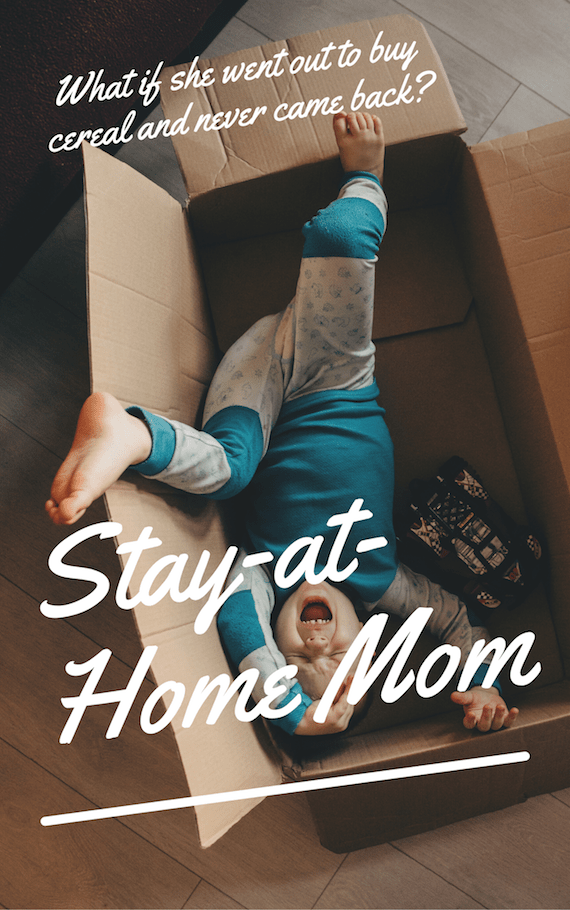
Stay-at-Home Mom

It’s been almost two years since Hannah gave up her career in publishing to raise her daughter, Olive, and three years since she put on anything besides maternity jeans. Her pelvic floor sags like a hammock and she can’t remember the last time she didn’t smell like curdled breast milk or didn’t stay up until two a.m, leaving snarky comments on various Mommy message boards. But all this seems frivolous now that she and her husband, Ben, are quarantined with Olive in their cramped Brooklyn apartment as the coronavirus brings New York to its knees. When Ben isn’t locked in the bedroom making his glitchy conference calls for work, he’s riding anxiety attacks about the state of the world and begging Hannah to don their single dingy surgical mask and gloves to pick up yet another box of Honey Nut Cheerios. With nothing to do but occupy Olive and appease Ben, Hannah feels her sanity crumbling. Then she misses her period. Faced with another possible pregnancy, she can’t stop thinking about the episiotomy she begged for when Olive was born, and which she and Ben are still paying off via their health insurance’s installment plan; how when she masturbates, she can’t get fellow BabyCenter user MomtoMaddox447 out of her head; how Olive looks so much like Ben that Hannah wants to vomit; that sometimes she imagines cutting off her own arms and legs and hoisting her bleeding torso into her rollaway suitcase and zipping it up (with her teeth) and rotting there forever. And how all this is better than her old publishing job where she was regularly expected to kiss the egomaniacal asses of Bookstagrammers who never read the novels they posed next to succulents and mugs of bone broth. What if she contracted coronavirus, just to be alone? What if she went to buy cereal and never came back? In the tradition of Jenny Offill’s Dept. of Speculation and Lydia Kiesling’s The Golden State, with a soupçon of Ali Wong’s irreverence and Cardi Bi’s social media sass, Stay-at-Home Mom is an unflinching and pitch-perfect portrayal of motherhood during our biggest contemporary crisis. Ask yourself, are you a good mom?

What books do kids like best?

Duh… Ones that tell them things they need to know about the world. As opposed to adults who already know too much and would like to forget it. Shows how the survival instinct wanes, I suppose.

The study suggests that children may lean toward causal discovery in books because of its intrinsic rewards.

Figuring out an explanation for how something works might lead to dopamine release, which is the brain’s response to pleasure, Shavlik said.

“There’s sort of a connection that when children are seeking explanations and when they finally understand the explanation, they feel there’s a chain between some mastery over some part of the world,” said Dr. Dipesh Navsaria, an associate professor of pediatrics at the University of Wisconsin–Madison and the medical director of Reach Out and Read Wisconsin.

Hump dump

It’s the Wednesday news dump. If you’re counting down to the weekend when you’re allowed to drink again, you’re halfway there. You’re also a chump. I’m drinking basically every night right now and I feel it’s not only essential, but earned. So enjoy your Earl Grey and your hump dump, chump.

A very special episode of Letter from the New York Times Books Editors

This is misty-eye-making for those of us in the business, even if it amounts to a secular “thoughts and prayers” type thing. It’s nice to have some paper-of-record recognition that your world has a soupçon more flaming shit in it than the next guy. I’m so glad I don’t have a book coming out this year. Even the one I have coming next year is frankly up in the air. If you’re a Bookninja pal/reader with a book coming out now, send me an email and I’ll see if I can’t note it here.

Apart from the obvious life-and-death matters at stake, we at the Book Review are especially concerned for those whose livelihoods depend on books. We think of the authors whose book tours have been canceled, authors who depend on income from teaching, authors who need money from speaking engagements to supplement their advances. All of those opportunities, temporarily — and in some cases, permanently — gone.

Our hearts go out to the debut authors of the season, many of whom spent years, perhaps a lifetime, waiting for the dream moment when their first book would make its way into the world. We think of the authors whose publication dates have been delayed, complicating not only their financial lives but all other plans, professional and personal. We think of the authors whose new books are coming out right now, at a moment when the realities of everyday life can feel all-consuming, and when libraries are shuttered and many bookstores have closed or laid off workers.