Fun Friday Finish Line

You made it to Friday again, ninjas. You’re in the home stretch. Finish out this rotten week and stare into the abyss of possibility that is your weekend. Look at all that freedom, just there, glistening on the edge of 5pm. It’s calling to you. “Drink meeeeee” it’s saying. “Driiiiiiink meeeeeeee…” Who are you to defy it?

What’s the worst CW workshop moment you’ve ever lived through

I’ve had some doozies, especially as a teacher. The relating of several of these might end in lawsuit, so I’ll just ask for yours instead and point you to this interview with Megan Stielstra, wherein she offers a pretty decent competitor for worst of the worst. And here you thought the douchebro who says he doesn’t read or edit his work because it might influence his writing and ruin how “raw” it is was bad. (As a student, I once had to belt-loop a guy out of the room like a nightclub bouncer because he was freaking out on the instructor. In fairness to Hothead McGee there, the instructor had just told him Bukowski would have been ashamed the fellow had considered him an influence. It was ugly.)

Which one will snap first?

What’s the worst thing you’ve ever gotten out of a writing class or workshop as a student?

A student wrote a story about my death. He was not subtle; the character was named Megan Stielstra. He included a scene of my funeral—the only person who showed up was a character based on himself. He wrote that it was very sad that nobody else loved me.

Nice day news

Well, it’s going to be nice here today. That’s actually news, in and of itself. Sadly, when it is a nice day in Newfoundland, Ms. Ninja kicks into action. She is making me go on one of her patented Death March Hikes™ later, so if I want to get some work done on the novel (just passed 100,000 words yesterday!) I best make this quick.

Actual image of me on hike.

Books are good for your brain!

Stunning new article in Popular Science. Man, that is some surprising research right there! Now, now. Let’s not be snobs. I mean, all the time. PopSci is for not for the people like us. It’s for armchair science types who like to join party conversations with “Well, actually…” Hey, wait. I know quite a few literary types like that too. Hmm. Lot’s to think about today….

Science has found that reading is essential for a healthy brain. We already know reading is good for children’s developing noggins: A study of twins at the University of California at Berkeley found that kids who started reading at an earlier age went on to perform better on certain intelligence tests, such as analyses of their vocabulary size.

Other studies show that reading continues to develop the brains of adults. One 2012 Stanford University study, where people read passages of Jane Austen while inside an MRI, indicates that different types of reading exercise different parts of your brain. As you get older, another study suggests, reading might help slow down or even halt cognitive decline.

On Zoom and reading

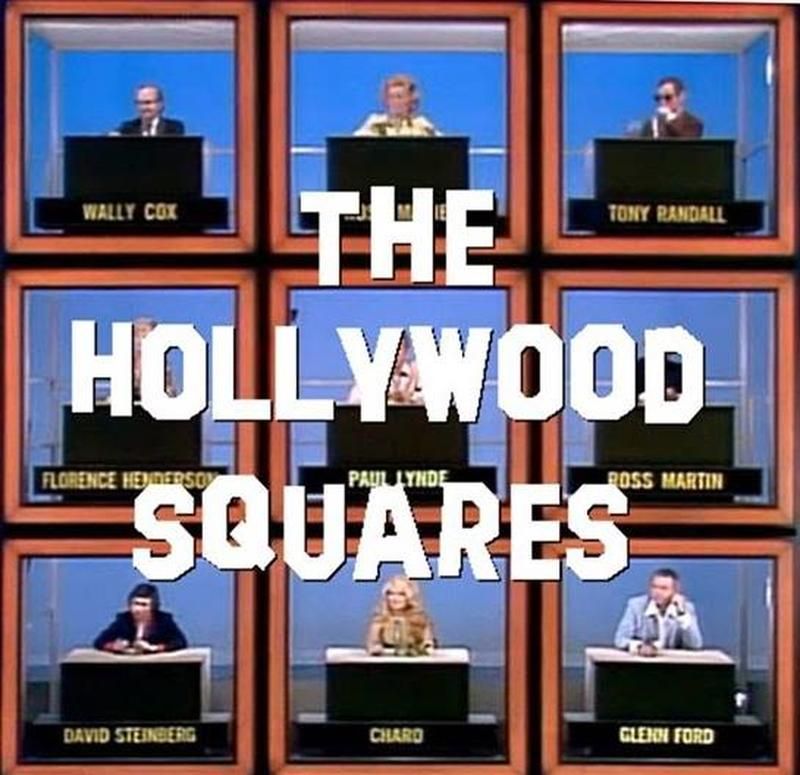
Did you know The Stranger is organizing silent group reads to feel less lonely? I find this horrifying. I struggle to make sure people I don’t know have very curated access to my life. The last thing I need is a rogues gallery of rejected Hollywood Squares participants watching me nod off in my ratty sweater by the fire. Some things are sacred, even when I’m lonely. Reading time is one of them.

You’d be surprised how long it took me to find a HS snap with Charo in it. I was hoping to get Vincent Price in there too, but I don’t have all day.

My silent reading party begins the same way every week, promptly at 6 p.m., with the now very familiar initiation of a Zoom call. A piano player’s hands appear in close-up among the gallery of boxes on my screen. His set list, a mix of Eric Satie and Radiohead instrumentals, will be the only sound. Like the windows of a New York City apartment building at night, other boxes soon come to life. People are in their homes, on their couches or in bed, all with a book. A hundred, then two hundred, absorbed in their reading, muted.

There’s a gray-haired woman at her kitchen table, more daydreaming than reading. There are couples, some eating bowls of pasta; a mother and daughter snuggling on a sofa; a woman petting her dog in front of a fireplace; a young man and woman sitting in armchairs dressed in a suit and sequin gown, martinis in their free hands. One week, I counted five cats, nine dogs and 22 glasses of wine. Inside one unforgettable box was a woman lying on her red leather couch, her book resting on her chest and her eyes closed — she’d fallen asleep. This lasts two hours. It’s mesmerizing, found performance art.

Deep (sixed) literacy?

Conservative mag National Affairs is worried “deep literacy” is dying out in America. Hell, have you been paying attention to the state of affairs down there? We should be worried about basic literacy. But I digress. Seriously, though: what is your take on the idea that digital devices are ruining our ability to think? I wrote a whole book about this that no one read. Seems to check out. (Yes, it’s a conservative journal, but every now and then it’s good to bug the locker room of the other team to see what they’re up to. Sometimes you find some interesting stuff.)

Deep literacy has wondrous effects, nurturing our capacity for abstract thought, enabling us to pose and answer difficult questions, empowering our creativity and imagination, and refining our capacity for empathy. It is also generative of successive new insight, as the brain’s circuitry for reading recursively builds itself forward. It is and does all these things in part because it touches off a “revolution in the brain,” meaning that it has distinctive and describable neurophysiological consequences. Understanding deep literacy as a revolution in the brain has potential payoffs for understanding aspects of history and contemporary politics alike.

Deep reading has in large part informed our development as humans, in ways both physiological and cultural. And it is what ultimately allowed Americans to become “We the People,” capable of self-government. If we are losing the capacity for deep reading, we must also be prepared to lose other, perhaps even more precious parts of what deep reading has helped to build.

In science fiction, the typical worry is that machines will become human-like; the more pressing problem now is that, through the thinning out of our interactions, humans are becoming machine-like. That raises the possibility that the more time we spend with machines and the more dependent on them we become, the dumber we tend to get since machines cannot determine their own purposes — at least until the lines cross between ever smarter AI-infused machines and ever less cognitively adept humans. More troubling are the moral issues that could potentially arise: mainly ceding to machines programmed by others the right to make moral choices that ought to be ours.

Library news bits

Given my feelings about librarians (browr), I suppose “Hump Day” is a good time to check on what’s going on in their world. Basically, they are saving the planet, etc., just like before, but a little louder now now that the stacks are closed.

Hate Amazon? Still use it? You are not alone…

Even people who hate Amazon are still addicted to it. In fairness, I don’t buy books there anymore, but living on this chunk of rock in the middle of the North Atlantic means that sometimes Amazon is the only way I can get certain things. Like buyer’s remorse. So I still order a few things from there now and then, but only as a last resort. I do say a little prayer though, every time, that Jeff Bezos gets a trillionaire’s worth of genital warts until he pays his taxes.

Amazon has become so addictive that it’s now taking a significant share of Americans’ income. The company siphons off 2.1 percent of all household spending—or some $1,320 for a U.S. family that earns $63,000 a year. The main reason consumers open their wallets for Amazon is that it saves shoppers the time, hassle, and expense of driving or taking public transport to a store to purchase mundane items such as diapers or batteries. A case in point: when Charlotte Mayerson, a retired book editor living on Manhattan’s Upper West Side, needed new batteries for her old landline phone, she hopped a bus to the nearest Best Buy for a replacement. The helpful clerk said: “Best Buy does not carry that battery, but I’d be happy to help you out.” He walked to his computer screen and ordered the woman her replacement batteries—on Amazon.

Even some shoppers who despise Amazon can’t live without it. Nona Willis Aronowitz, in an op-ed for the New York Times, said that on principle she hated Amazon because of the reports she’d read about the way it treated its warehouse workers. Yet, after her 85-year-old father, who’d been a labor activist at one point in his career, had suffered a debilitating stroke, Aronowitz came to depend on Amazon for making sure her house-ridden dad had everything he needed—from physical therapy balls to cheap tubs of protein powder. Aronowitz saw using Amazon as a “deal with the devil,” yet wrote of her father: “He can’t shop on his own, and his caretaker can’t spend her life going to specialty pharmacies and medical supply stores. So Amazon Prime has been his lifeline.”