Don’t let browsing die

This op-ed at Bloomberg is a rallying cry for finger-the-merch set of folks who seem to have no jobs and endless hours to spend wandering bookstores. We called them Test Drivers when I worked at Coles in the 80s. Personally, while I enjoy the IDEA of browsing, I’ve never been very good at it. Ms. Ninja and our daughter The Artiste both love to just go “look at things.” My problem with that is that too often “just-looking” becomes “just-wanting” and then “just-buying.” Plus, I never have time to do browsing justice. You have to have time, wide interest, and more time. Book shopping for me has become like shopping for jeans. I want my size 36 / 32 501s (or 514s if I want to be comfy). I know exactly where they are and I beeline straight there, grab without trying on, buy, then exit as quickly as possible before someone who I had to drag along to force them off video games asks me to buy them something else. It’s a delicate, finely-tuned ritual. Book buying is like that. I go in with a list, and come out with only that list. Otherwise, the VISA starts melting. But I see his crotchety old point. So, never let it be said that I didn’t give enough time to crotchety old points.
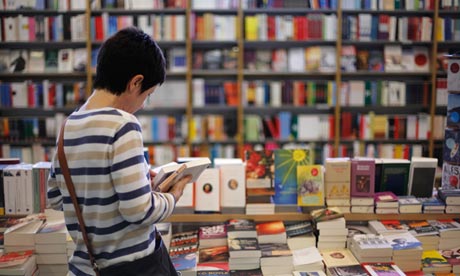
Browsing is a voyage of constant discovery. You run your fingers along the spines of the history section only to learn that the volume you’re looking for isn’t in stock. No matter. You find a fascinating book you’ve never heard of and know nothing about, a treasure upon which you happened only because you were looking for another. You pick it up, you leaf through it, you decide to buy. (Especially — no kidding! — if the smell of chocolate is in the air.) No matter how many screens you glance at online, you won’t duplicate the number and variety of volumes you can swiftly take in by spending even a few minutes in a bookstore aisle.

So much for all that. To begin with, a lot of people will understandably be uneasy about browsing because browsing means more time in the store, and they won’t want to chance infection by another customer. So maybe it makes sense that Barnes and Noble plans to remove those comfy chairs and benches where people used to sit and read. But browsing is also tactile, testing a book’s heft and weight even as you leaf through the pages. That’s going to be harder than ever, given that the chain has also announced plans to quarantine for five days every volume a customer handles. With booksellers nowadays often displaying only a copy or two of all but the most popular titles, the book quarantine will have many buyers ordering on their phones instead.
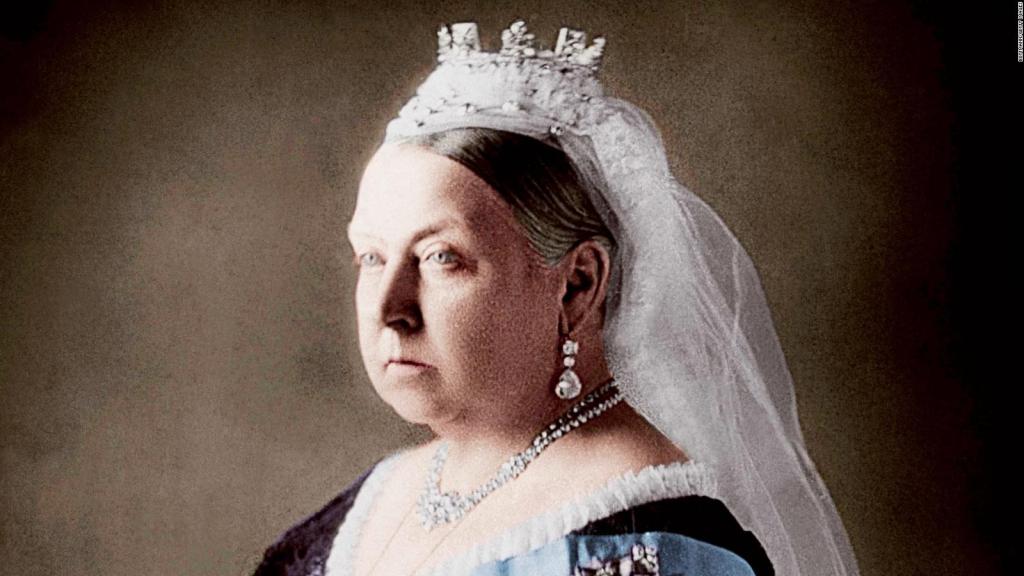
Happy Victoria Day, Canada

I’m just posting a few news bits here for the Yanks and Brits (wait, do they get a holiday too, considering it’s their humourless autocrat we’re celebrating? Go back to bed, then, guv’nors) who might show up looking for something to do other than remember it’s Monday. In Canada, the weekend past is traditionally when we celebrate the end of possible snow storms and the ceremonial opening of the Labatt products at our many cottage built on land we stole from the people who were already here when we arrived in this country looking for pristine lakes to take selfies in front of while mounted on Seadoos. Or something like that. I didn’t pay attention in the state-sponsored revisionism called ninth grade History. Definitely we were the douches, though. And every year we celebrate that by getting as douchey as possible among the natural wonders of the land we still illegally call our own.

This Heritage Minute has been brought to you by….

Vicky herself… Imagine the (not-real, don’t worry) right of primae noctis being evoked back then… Yeesh

Book taxonomy 101

BookRiot breaks down the types of books out there, for the uninitiated. At the first poetry reading I ever went to (bill bissett! Holy shit, was that a strange night for a young yokel from rural Ontario), a guy walked up to me and asked if I wanted to buy his new book. Trying to appear cosmopolitan while actually being just poor, I said, “Sure, let’s see it.” What he produced from his bag was a stack of irregularly cut shards of photocopied paper with a staple right through the middle. It looked like a short-order cook’s little spike with order chits on it. I said something like, “I thought you said this was a book?” to which he replied, “It is, man…” and 23 year old me was all like, “Whoa.” So I bought the damn “book.” Then the maracas came out and I was like, WHERE THE FUCK AM I? But it all worked out.

Why are they shaped the way they are? Why are there so many different book formats? How can you fit all of these different sizes of books on your bookshelf?

For that last question, I have no answer. Though that hasn’t stopped others from trying to make sense of all of these mismatched sizes.

“It is, admittedly, all too easy to take the existence of physical books for granted,” writes Keith Houston in The Book. “The sheer weight of them that surrounds us at all times, in bookcases, libraries, and bookshops, leads to a kind of bibliographic snow blindness.”

Recent news, though, has us thinking more deeply about book formats. In March, Harlequin discreetly made some changes to its mass market paperbacks; it made them bigger, dubbing the new format “mass market paperback max.” And in April, Kensington Publishing announced plans to switch its mass market to titles to the “mass max” size in September 2020.

What does all this mean? What’s a mass market paperback, and how’s it different from any other paperback? Why are books different sizes anyway? Let’s revisit the different types of book formats and why each exists.

Does being a reader mean you’re smart?

Does wearing track pants mean you run track? Narp. BUT…. On the other hand, all track stars DO have track pants, if you know what I’m saying. Anyway, CBC asks some smarty-pants types about the question above.

We tend to think that reading is a sign of intelligence, that we are improved by reading, that there are books we must read and others beneath our attention. 

But are our assumptions well-founded? Not really, according to an array of literary front runners who speak with IDEAS contributor, Barbara Nichol.

After a bookish conversation at a dinner party, she went on a quest to explore the assumptions we have about reading, readers and books. She sought out writers, critics, scholars and journalists: some of the keenest minds and most original thinkers in the literary world. 

And what they had to say is both surprising and delightful.

On celebrity and audiobooks

A few years ago, I got to do the audiobook version of my book for kids book Wow Wow and Haw Haw. It was fun and I would love to record again. I’ve done some radio and some commercials and feel more at home in front of a mic than an audience. (Probably because one time when I was reading it to a class of first graders, one kid went up to the teacher and tugged on her arm and said with what was obvious disdain: “Why can’t we find a nice lady to read it?” Listen, kid, I get it. I would prefer that too. But I needed this sale and it is what it is. Get used to disappointment. Now get your raspberry-yogurt-stained ass back on your circle and lets get this over with.) Anyway, this article is about what it’s like to be a recognized voice, if not face.

At 50, Edoardo Ballerini enjoys a particular kind of stardom. He is rarely asked for his autograph; fans do not wait outside his recording studio to catch a glimpse of him, and many would not recognize him if they chanced to pass him. And yet he sits at the forefront of a new form of celebrity, like that of the YouTube or podcast star. He is paid at the top range of his field, celebrated in reviews and with honors — he has won his industry’s top awards — and his name is one that might as well appear in italics for an avid portion of audiobook listeners.

The audiobook “star,” an invisible yet intimate voice in the reader’s ear, is an artist who helps to create the experience of what it means to “read” a given book. The oldest form of storytelling has been rendered salient once more by technology: the smartphone, the app, AirPods. Before coronavirus, according to audiobook publishers, the peak use of their product came during commuting hours; more recently, they have seen consumption shift to post-dinnertime, when people are trying to wind down before bed. While sales of digital audiobooks have grown steadily over the past seven years, by an average of 27 percent, e-book sales have experienced significant declines.

How safe are library books right now?

They’re fine, people. The virus can’t live on paper for more than 24 hours, so just relax. If you need a place to focus the fight-or-flight bursts of anxiety-inducing chemicals your brain is manufacturing faster than a Chinese facemask plant, try thinking of this: I have worn a hole through the wool at the elbow of my favourite cardigan and I can’t get out to get suede patches, which means I appear less professorial and more hobo-like than would otherwise be the case. It’s basically the greatest tragedy in the history of humanity. Focus there.

“I currently have over 1,000 books signed out to students,” she writes. “I’d like to know if the virus could be present on returning library books. Some of the books are paperback, and some of the books have mylar or laminated plastic covers.”

According to Dr. Colin Furness, an infection control epidemiologist and assistant professor at the University of Toronto, the precautions for books should be the same as anything else you come into contact with.

“Book borrowing is a bit like grocery shopping,” said Furness. “You are touching items and bringing them into your house. We can’t wash or boil books, obviously. So, the thing to do is to clean your hands after touching them before touching your face, and to let them sit for 24 hours.”\

The virus on a book should be completely inactive after 24 hours,” Furness said.

It’s Friday! Score!

You avoided a red card and kicked that puck right into the basket at the end zone for a three-pointer touchdown, and now all that remains is to strike out the putter in midfield who seems to have … uh … SPORTSBALL METAPHOR! You made it to Friday. And everyone knows we take a break from the end of the world on Friday. So pour yourself a glass of wine or tea, depending on your preference (you know it’s wine), and relax with some various stories from around the world of books.

What is a book review actually for?

This guy is calling out reviewers who are more interested in their own cleverness than reviewing the book at hand, and asks why we tolerate this. Oh, sweetie, you don’t actually want the answer to that. It’s the same reason the world is currently run by bombastic buffoons and reality TV stars. We value entertainment over substance. And critics are are either smart enough to know, or self-absorbed enough believe, that translates to critical writing.

Broadly speaking, then, there are two main aims of a non-fiction book review in the general press. (I’ll come onto the more specialised organs, the TLS and the LRB, in a moment.) The first is to allow a significant literary figure to write a lengthy piece displaying their erudition, and which permits sub-editors to come up with a headline along the lines of ‘Julian Barnes on Jean-Paul Sartre’ or similar. The book itself is secondary, its coverage almost an irritation. And the other is nuts-and-bolts criticism, an engagement with an author’s intentions and aims where the fascinations of the subject are secondary to whether the writer has managed to make them accessible to a general audience. This may be less lofty, but is undeniably of more use to the profession, and probably to the potential purchaser, too.

It is incomprehensible that the first category has been so popular in the books industry for years. It would not be permissible or desirable in any other art form. It is inconceivable that one would read a review of a new staging of Hamlet which muses on the difficulties of staging the play, textual issues with the First Folio etc, and then concludes with the words ‘most of the performances are fine’ or ‘the lighting is excellent’. And in a culture that decries spoiling cinematic revelations, film criticism is an even harder art to perfect: writers who spend too long on plot synopses, or inadvertently give away surprises, are likely to find themselves subject to a barrage of aggrieved abuse on social media from disappointed fans.

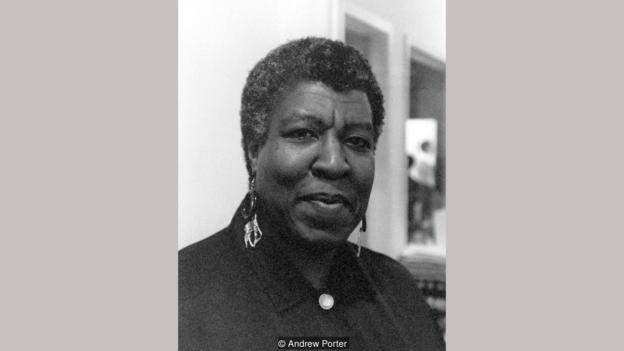
Octavia Butler: another author for our times

Or, basically, any times. But, like Saunders below, her work is echoing loudly right now. I’ve been going back to read through some genre classics lately, including Solaris by Lem, A Canticle for Leibowitz by Miller, Left Hand of Darkness by Le Guin, etc. I should really put Butler on there as well to reacquaint with Kindred.

A revolutionary voice in her lifetime, Butler has only become more popular and influential since her death 14 years ago, at age 58. Her novels, including “Dawn,” “Kindred” and “Parable of the Sower,” sell more than 100,000 copies each year, according to her former literary and the manager of her estate, Merrillee Heifetz. Toshi Reagon has adapted “Parable of the Sower” into an opera, and Viola Davis and Ava DuVernay are among those working on streaming series based on her work. Grand Central Publishing is reissuing many of her novels this year and the Library of America welcomes her to the canon in 2021 with a volume of her fiction.

A generation of younger writers cite her as an influence, from Jemisin and Tochi Onyebuchi to Marlon James and Nnedi Okarafor, currently working on a screenplay for the Butler novel “Wild Seed” for the production company run by Davis and her husband, Julius Tennon. Davis, in a recent interview with The Associated Press, said she began reading Butler while attending the Juilliard school 30 years ago.