On dealing with terrible brilliant aritists

What should we do with the art of people who are brilliant and yet bad for progress in the world? I don’t know, man. I’m just trying to not be a bad guy and still create art myself. It doesn’t get as much attention, that’s for sure, but at least I can look at myself in the mirror and admit less unpleasant things like, “You’re getting old” or “If that hairline goes any thinner, you’ll have to start giving individual hairs names to track them”. But I digress: this is an important question for our time, since we’re now in the business of pointing out and punishing bad behaviour instead of chuckling at it and rewarding it. But how far back do we punish? The way I look at it is, there’s SO MUCH art out there, why would I spend time on something that leaves a bad taste in my mouth when there’s something equally as good or enlightening by someone who isn’t a douche? Good for discussion, anyway.

When I recently interviewed American author Richard Ford for this paper, one question was bound to come up: his treatment of critics who have given him bad reviews, one of whom was sent a book with a bullet hole in it, another of whom was spat on. Ford’s response was not especially enlightening – he gets asked about this a lot – but it did raise an interesting, secondary question.

On social media and in the interview’s comment section, some readers said they no longer bother with Ford’s books after these actions. Part of this response is likely because what Ford did was so targeted, personal and grotesquely intimate; but writers also lose readers for broader political reasons, and for speech as well as actions.

When Peter Handke won last year’s Nobel Prize in Literature, the commentary in the press was not about the work, but about Handke’s defence of Serbia’s actions in the 1990s Bosnian war. “The Swedish Academy is still an attention-seeking trashfire,” said one British newspaper books editor. Aside from the damage to the Nobel’s reputation – already on shaky ground – there is an additional loss in that many will no longer want to read Handke, whom John Updike called “the finest writer in Germany”.

But can we really separate the writer from the work? If a book is an expression of the author’s psyche, why would we want to rummage through the dregs and peelings from the mind of someone we find repellent?
Wednewsday

I mean, is there really any other news today than the letter? Wait… “The Letter”. Needed caps. And perhaps a gothic, church organ soundtrack. Here’s what would have been covered if the entire literary world wasn’t sharpening long knives in their respective dark rooms.

Please fetch my 10-foot pole so that I might decline to touch this letter

Actual footage of me.

So, there’s another open letter. FFS. I’m still scarred from the last one, which I signed for all of about one hour until I was swiftly and mercilessly educated on the context of the letter by Ms. Ninja. It was sent to me by a friend whose judgment I trusted, and seemed to present as a fairly reasonable argument about due diligence and poor decision making on the part of an institution, but I regret signing it, given all that I know about the situation now, and I take responsibility for the fact that it was my privileged position within society that let me gloss over all concerns but the academics of the argument. Then watching the letter divide and destroy the entire community as it became a political tool for those seeking to entrench an ideological stance that’s already entrenched, rather than effect real change…Well, it’s a moment of shame for me, as I imagine this new one will end up for some of the signatories already on the letter.

I read the letter last night and here is my takeaway: it sounds reasonable, once again. EXCEPT… EXCEPT… It’s so very vaguely written that it allows multiple interpretations and has so many problematic signatories whose very presence skew the letter toward a manifesto calling for freedom of bigotry instead of freedom of argument.

I find it difficult to separate the argument of this letter (as well as its timing) from the fact that some of the Western world’s most marginalized groups are in a state of outright rebellion, fighting on the streets in some cases for their lives and rights to exist without prejudice.

What is your take on this?

Published in Harper’s Magazine, the letter is signed by more than 150 writers, academics and artists, also including major names such as Martin Amis, Noam Chomsky, Steven Pinker, Malcolm Gladwell and Gloria Steinem.

Acknowledging that “powerful protests for racial and social justice are leading to overdue demands for police reform, along with wider calls for greater equality and inclusion across our society”, the letter goes on to decry what it calls “a new set of moral attitudes and political commitments that tend to weaken our norms of open debate and toleration of differences in favor of ideological conformity”.

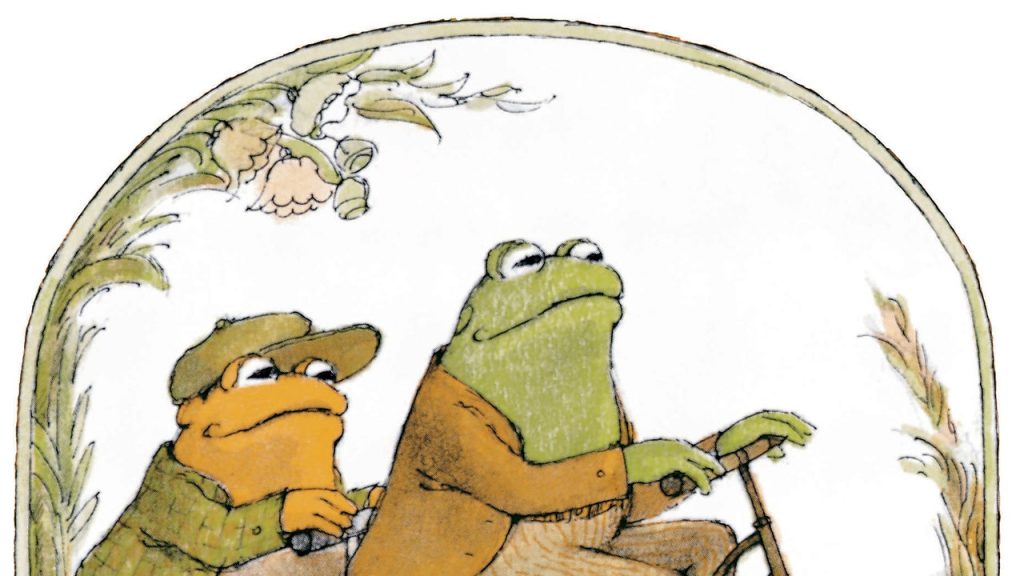
Frog and Toad are 50

Damn, they look good for their ages. Amphibians, eh? We read so many Arnold Lobel books in this house, it’s not funny. I realized my firstborn could read when I tried to skip a paragraph in a Mouse Tales story to hurry bedtime along and he said, “You missed this part here,” and pointed to the words. He was three and a half. My personal favourite of his books is Owl and Home, but we did Grasshopper on the Road, Uncle Elephant, all the F&T series, Mouse Tales, Mouse Soup, the Fables, etc. etc. Love them, and probably the most in-rotation books of our early days here, along with AA Milne and EB White. Here are a bunch of authors at Slate reflecting on the influence of Frog and Toad over the years.

“The very first thing is sad,” marvels Mac Barnett about the opening story in Frog and Toad Are Friends. Barnett, a prolific children’s book author whose work includes Sam and Dave Dig a Hole, is right about that. Though the book series by Arnold Lobel has filled young readers with a sense of warmth and closeness for five decades, Frog and Toad opens with disappointment and desperation. It is the first day of spring, and Frog is eager for a celebratory post-hibernation reunion. But Toad won’t get out of bed. He tells Frog to return in a month and hops back to sleep. Frog pleads, “But Toad, I will be lonely until then.” Instead of resigning himself to isolation, Frog sneaks back into Toad’s house, rips a handful of pages out of the calendar, wakes Toad back up, and tricks him into believing a month has passed. “Faced with the prospect of being alone for a month or committing an act of deception, he deceives his best friend,” Barnett explains. “And it’s a happy ending because they’re together. These amphibians, they act in complicated ways to each other, but the friendship is the only thing standing between them and despair.”

Love letter to indie bookshops

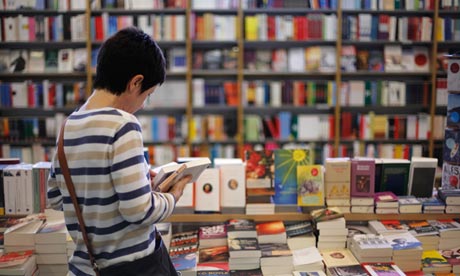
Harpers Bazaar has a reflection extolling the virtues of the indie bookshop. Some of my favourites have been: Three Lives in Manhattan, Book City and Type in Toronto, The Bookshelf in Guelph, etc. Sadly, I now live in a city without a single independent bookstore, so I’m a little cut off from that experience, despite living in the story-telling capital of Canada. What are your favourites?

There’s nothing quite like an independent bookshop. From the wonderful smell of the paper as you walk in, the intriguing shelves full of coloured book spines, to the knowledge and personal commitment you sense from staff. Book stores are sanctuaries of discovery, creativity and possibility.

So many of us have turned to books during covid-19 – we have looked for escapism, inspiration, comfort and education. We’ve tried new recipes from our cookbooks and dreamed about our next holiday. Personally, I found myself searching for out of print wild flower illustration books by Majorie Blamey, I guess it was my way of connecting with nature from my dining room zoom table.

Is “irregardless” a word?

Firstly, it may be impactful and overwhelming to administrate alot of words that are utilized wrong these days, but removing them wholesale from the language is just disorientating. (FTR, the only words underlined as wrong when I compose this post were “impactful” and “alot”.) Which bizarro non-words would you like to see consigned to the trash heap of history?

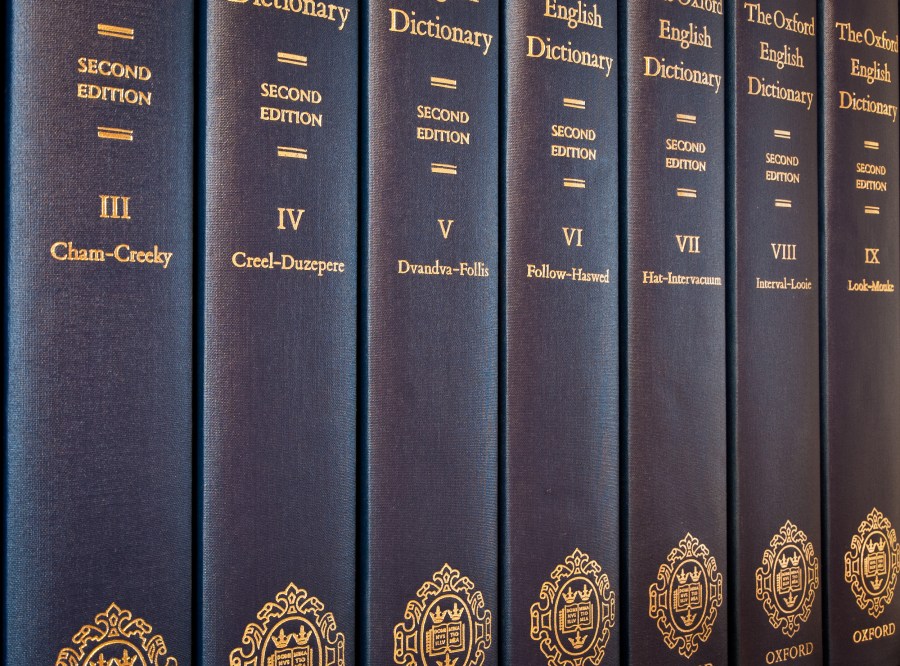
The debate over the word is age-old (the word appeared in print as early as 1795) but continues to upset some people – teachers in particular. Evidencing the controversy over the word, Merriam-Webster’s own dictionary definition for irregardless includes a frequently asked questions section, for which the first question is: “Is irregardless a word?”

Merriam-Webster editor Peter Sokolowski tweeted a handy tip on how to deal with the news this weekend: “The trick is to remember that acknowledging existence and endorsing worth are not the same thing.” But somehow, we’re still not sure – here are four Guardian journalists explaining their takes.

On failure

Can failure be success? I tell my kids that failure is just a way of narrowing yourself down to success, like scratching off an item on the old to-do list. I failed 10 times in the last week to make that poem work, but now those possibilities are eliminated and I’m closing in on what does work. Of course, it just feels like shit at the time. And sometimes there are not enough years left to wade through the failures to find success, but I don’t tell them that part. A new book looks at the history of failure and how it’s used to work towards success.

“Fail again. Fail better,” wrote Samuel Beckett in what has become a familiar mantra in the world of business and tech start-ups – along with ‘Fail fast, fail better’ – where the notion of failure as a route to success has taken a firm hold. Recent years have seen a similar preoccupation seeping into literature, particularly in the memoir sector. Karl Ove Knausgård devoted several autobiographical volumes to everyday failures in My Struggle, and since then there has been a deluge of ‘fail-lit’, both in fiction and non-fiction. Could failure be the new literary success? And if so, doesn’t that mean it’s not really failure at all?

Dionne Brand is perhaps the smartest, most-eloquent person in Canada

Basically everything that comes out of that woman’s mouth or pen is exactly what I needed to hear at any given moment, and much of it is very uncomfortable to read. Years ago when the National Post had a brief run as the arts section to beat in Canada, I participated a sort of Canada-Reads for poetry (since it’s long been a beef of mine that “Canada Reads” is exclusively mainstream literary fiction, and I stand by my calls to rename it such: “Canada Reads Narrow Band of Mainstream Literary Fiction”, but I digress) and I championed Brand’s Inventory, which I still go back to to this day. I hope we one day have a world in which that book seems antiquated, but I don’t see it coming, frankly.

I don’t think that capital is in crisis, the neo-liberal state it created is in crisis.

Time in the city is usually taken up running around positioning oneself around this narrative of the normal. But the pandemic situates you in waiting. So much waiting, you gain clarity. You listen more attentively, more anxiously. “We must get the economy moving,” they say. And, “we must get people back to work,” they say. These hymns we’ve heard, these enticements to something called the normal, gesture us toward complicity. Most of my friends and family never stopped working anyway — they work in health and community services. The quarantine has alerted us all as to how much we’ve ceded to those (we put) in power. The state is in angst, too, about our political demands. It offers some the seduction but others the violence of the normative narrative. Because seriously, what is it to get people ‘back to work’ if there is no remedy or vaccine? If some people have never stopped working. If the only thing that has changed is the rate of infection not the presence of the virus? What is the calculation by which one arrives at this cruel expendability.