Kendi on Trump and, hopefully, racism’s end

I just started Ibram X. Kendi’s How To Be Anti-Racist this week. Took forever to arrive from the bookstores because I believe it was on back order. A remarkable testament to the power of the times.

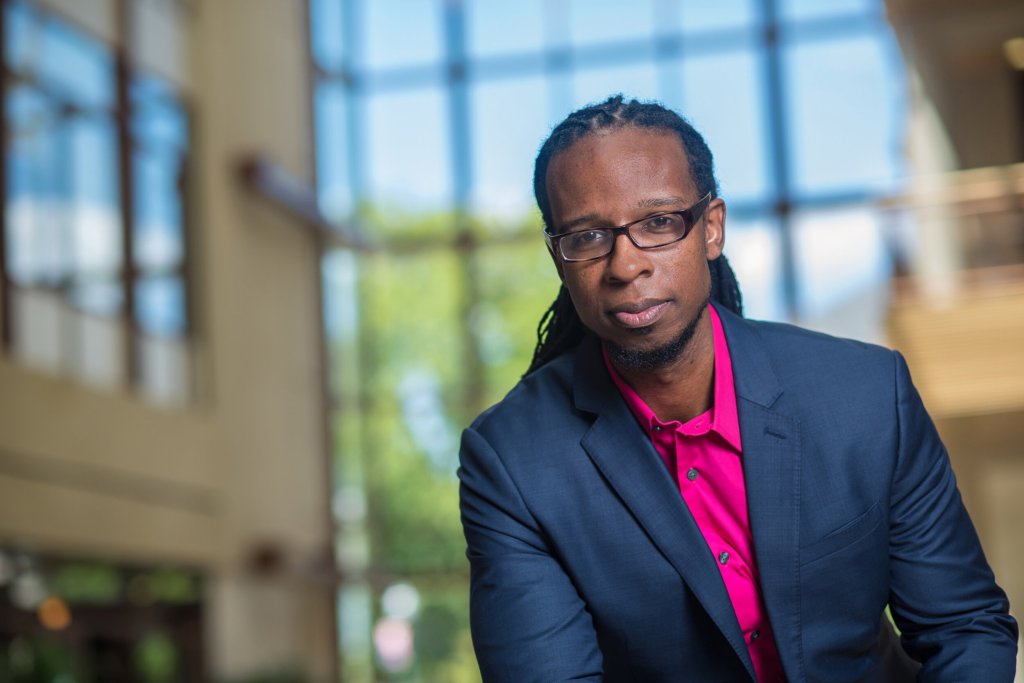
In The Atlantic Kendi asks: has Trump’s presidency finally forced a reckoning on race in the USA? He points out that during the 2016 election, he knew that progress in US politics is typically followed by regression. I’ve always thought the same about Western politics in general. Happens here too. I used to call it a pendulum, and would console myself after losses to racist/misogynist/capitalist candidates with the idea that the pendulum would swing back eventually. Now I think of it more like Damocles’ sword than a pendulum. But still.

The America that denied its racism through the Obama years has struggled to deny its racism through the Trump years. From 1977 to 2018, the General Social Survey asked whether Black Americans “have worse jobs, income, and housing than white people … mainly due to discrimination.” There are only two answers to this question. The racist answer is “no”—it presumes that racist discrimination no longer exists and that racial inequities are the result of something being wrong with Black people. The anti-racist answer is “yes”—it presumes that nothing is wrong or right, inferior or superior, about any racial group, so the explanation for racial disparities must be discrimination.

In 2008, as Obama was headed for the White House, only 34.5 percent of respondents answered “yes,” a number I’ll call the anti-racist rate. This was the second-lowest anti-racist rate of the 41-year polling period. The rate rose to 37.7 percent in 2010, perhaps because the emergence of the Tea Party forced a reckoning for some white Americans, but it fell back down to 34.9 percent in 2012 and 34.6 percent in 2014.

In 2016, as Trump loomed over American politics, the anti-racist rate rose to 42.6 percent. It went up to 46.2 percent in 2018, a double-digit increase from the start of the Obama administration. In large part, shifts in white public opinion explain the jump. The white anti-racist rate was barely 29.8 percent in 2008. It jumped to 37.7 percent in 2016 and to 40.5 percent two years into Trump’s presidency.
D18_185_Ibram_Kendi nfs

The UK makes poetry optional

GCSE students in the UK won’t have to study poetry for their exams next year. The Guardian covers this not-with-the-times decision while BBC begs kids to not give up on poetry… My take is this: poetry is like the CBC: the people who can benefit most from it come to it on their own time. The CBC keeps trying to change its formatting to court “younger” listeners, instead of just waiting for those kids to grow up and start wanting to know what’s going on with the world while listening to soothing voices and classical music from the bargain bin by the endcap of a box store record aisle. Patience. We’ll get them.

…the announcement is out of tune with the times. We are aware of an urgent need to diversify the curriculum: poetry, with its wealth of diverse, rich, yet accessible full texts is the best and quickest way to do that. It is no longer true that teenagers are resistant to poetry. On the contrary, more young people are engaging regularly with poetry than ever before: reading it, creating it, sharing it with each other, often on social media. A survey by the Children’s Literacy Trust in 2018 put it at 48%, especially, not except, among economically deprived children. Poems are spoken on TikTok and shared on Instagram. The Black Lives Matter movement has poets as central figures. Over the pandemic, poetry has been shared more than ever before.

George RR Martin apparently shit the bed at the Hugos

Personally, I would never want to do something like host an awards show anyway, because who even knows what nonsense would come out of my mouth, but it sounds like Martin may have learned this himself at the virtual event for the Hugos (world’s biggest sff awards, if you didn’t know). Funny, because GoT seemed so, uh, forward-thinking and diverse….. ….. ….. ….. ….. Vulture has some recap and then a bunch of reaction tweets, which is what seems to constitute a news article these days.

What diversity problem?

George R.R. Martin hosted the digital ceremony for the 2020 Hugo Awards, the annual event dedicated to science-fiction and fantasy writers and creators, on Friday. To celebrate a particularly diverse year of nominations — Comic Years reports that the all-female slate of Best Novel nominees was a Hugo first — Martin opted to repeatedly reference racist figures in the science-fiction community. Martin also bungled the pronunciation of several names, including those of winner Rebecca F. Kuang and FIYAH, a Black quarterly magazine run by Black writers.

Wednewsday

It’s kind of too nice here to be doing Bookninja, but I’m going to finish out this week then take a week or two off to vacation around the our apparently Covid-free province. Just don’t do anything interesting during that time.

How are publishers looking at reopening?

Can you imagine being told to come back to work in the US right now? You’d be like, dudes, I did not sign up to be a firefighter running into burning buildings. FFS, I work in editorial. It’s like the opposite of firefighting. I set fires under people for a living. How am I supposed to do that while constantly trying to not get burned? Publishers Weekly looks at how the industry is surveying the situation with an eye to reopening.

All publishers are working to balance the safety of their employees with a desire to return to some form of normalcy. For the most part, however, the uncertain course of the pandemic has made companies reluctant to move too quickly to fully reopen their offices, particularly as questions surrounding mass transit and childcare remain unresolved. “We are not going to put anybody’s health in jeopardy by rushing the reopening process,” one company executive said; that sentiment was echoed by all publishers contacted by PW.

To prepare for bringing back employees, one company described some of the changes it has made: new protocols for lobby screenings, improved circulation and air flow, new foot traffic patterns and floor plan adjustments, and new policies regarding mandatory PPE and social distancing.

On how paywalls are contributing to the dumbeningdownening of Western thought

I get why paywalls exist. Good writing needs to be financially supported and if ad revenue isn’t able to provide (or is against an aesthetic) a paywall ensures a continuation of the subscriber-based model from print days. Simple right? But what if you haven’t the budget for it? Like me. I am frustrated a lot that some of the outlets I used to go to for media are locked tighter than a conservative voter’s mind. I recently begged an editor friend to open up a few more stories at their trade publication so I could send some traffic their way and he pointed out that it would basically spell the end of the entire endeavour. I get it. Except, when you put all the good writing behind a paywall, you end up hiding the truth while all the lies of the internet remain free. How do we mitigate this? The Guardian takes donations to remain free (and I donate a few times a year when I have cash), but other than charity or state sponsorship (also dangerous in its own way), how do we move forward? Fascinating article here.

Now, crucially, I do not mean to imply here that reading the New York Times gives you a sound grasp of reality. I have documented many times how the Times misleads people, for instance by repeating the dubious idea that we have a “border crisis” of migrants “pouring into” the country or that Russia is trying to “steal” life-saving vaccine research that should be free anyway. But it’s important to understand the problem with the Times: it is not that the facts it reports tend to be inaccurate—though sometimes they are—but that the facts are presented in a way that misleads. There is no single “fact” in the migrant story or the Russia story that I take issue with, what I take issue with is the conclusions that are being drawn from the facts. (Likewise, the headline “U.S. Says Hussein Intensifies Quest For A-Bomb Parts” is technically accurate: the U.S. government did, in fact, say that. It was just not true.) The New York Times is, in fact, extremely valuable, if you read it critically and look past the headlines. Usually the truth is in there somewhere, as there is a great deal of excellent reporting, and one could almost construct a serious newspaper purely from material culled from the New York Times. I’ve written before about the Times’ reporting on Hitler and the Holocaust: it wasn’t that the grim facts of the situation were left out of the paper, but that they were buried at the back and treated as unimportant. It was changes in emphasis that were needed, because the facts were there in black and white.

This means that a lot of the most vital information will end up locked behind the paywall. And while I am not much of a New Yorker fan either, it’s concerning that the Hoover Institute will freely give you Richard Epstein’s infamous article downplaying the threat of coronavirus, but Isaac Chotiner’s interview demolishing Epstein requires a monthly subscription, meaning that the lie is more accessible than its refutation. Eric Levitz of New York is one of the best and most prolific left political commentators we have. But unless you’re a subscriber of New York, you won’t get to hear much of what he has to say each month.

Monday blahs

aksjd fkajsdf kajsdf ;klasdjf ;lkasdj f;lkajsdf aaksjdhf lashfyr ouweaoihf lvsn vlasdn f;kasjdfasdn;f lansd;fjhaoiea hij lkdnfklasd. And see if I don’t.

Story of the Year

John Boyne searches google for ingredients to dye clothes red and accidentally includes ingredients made from monsters in the Legend of Zelda video games. His novel is not a fantasy… THIS…. This is Bookninja’s bread and butter — the ridiculousness at the bottom of it all. In the end the art is affected by what’s happening around it, as always. He handles it well, though, and moves on. Could have happened to anyone (except me because my kids never stop talking about Breath of the Wild so I know too much).

Boyne took the revelation in good spirits, and said he wouldn’t be changing the section – but would add Zelda to the acknowledgments page of the novel’s paperback, despite never having played a computer game in his life.

“I’ll leave it as it is. I actually think it’s quite funny and you’re totally right. I don’t remember but I must have just Googled it,” he told Schwartz on Twitter. “Hey, sometimes you just gotta throw your hands up and say ‘yup! My bad!’”

He added: “Note to self: never talk about poisons in a novel again.”

Boyne took the revelation in good spirits, and said he wouldn’t be changing the section – but would add Zelda to the acknowledgments page of the novel’s paperback, despite never having played a computer game in his life.

“I’ll leave it as it is. I actually think it’s quite funny and you’re totally right. I don’t remember but I must have just Googled it,” he told Schwartz on Twitter. “Hey, sometimes you just gotta throw your hands up and say ‘yup! My bad!’”

He added: “Note to self: never talk about poisons in a novel again.”