Deep (sixed) literacy?

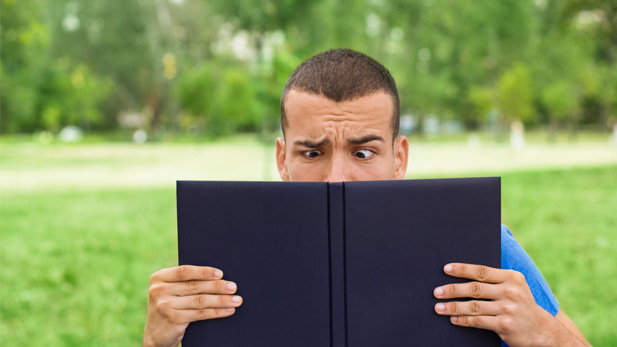
Conservative mag National Affairs is worried “deep literacy” is dying out in America. Hell, have you been paying attention to the state of affairs down there? We should be worried about basic literacy. But I digress. Seriously, though: what is your take on the idea that digital devices are ruining our ability to think? I wrote a whole book about this that no one read. Seems to check out. (Yes, it’s a conservative journal, but every now and then it’s good to bug the locker room of the other team to see what they’re up to. Sometimes you find some interesting stuff.)
Deep literacy has wondrous effects, nurturing our capacity for abstract thought, enabling us to pose and answer difficult questions, empowering our creativity and imagination, and refining our capacity for empathy. It is also generative of successive new insight, as the brain’s circuitry for reading recursively builds itself forward. It is and does all these things in part because it touches off a “revolution in the brain,” meaning that it has distinctive and describable neurophysiological consequences. Understanding deep literacy as a revolution in the brain has potential payoffs for understanding aspects of history and contemporary politics alike.

Deep reading has in large part informed our development as humans, in ways both physiological and cultural. And it is what ultimately allowed Americans to become “We the People,” capable of self-government. If we are losing the capacity for deep reading, we must also be prepared to lose other, perhaps even more precious parts of what deep reading has helped to build.

In science fiction, the typical worry is that machines will become human-like; the more pressing problem now is that, through the thinning out of our interactions, humans are becoming machine-like. That raises the possibility that the more time we spend with machines and the more dependent on them we become, the dumber we tend to get since machines cannot determine their own purposes — at least until the lines cross between ever smarter AI-infused machines and ever less cognitively adept humans. More troubling are the moral issues that could potentially arise: mainly ceding to machines programmed by others the right to make moral choices that ought to be ours.

Library news bits

Given my feelings about librarians (browr), I suppose “Hump Day” is a good time to check on what’s going on in their world. Basically, they are saving the planet, etc., just like before, but a little louder now now that the stacks are closed.

Hate Amazon? Still use it? You are not alone…

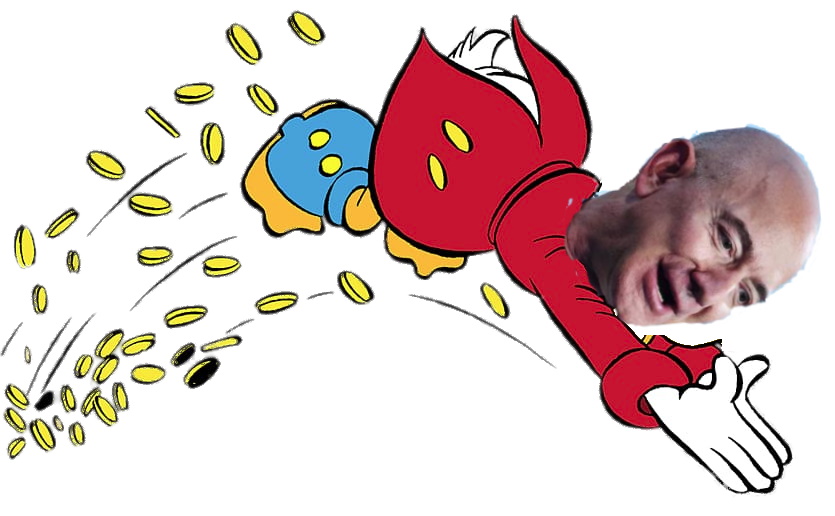
Even people who hate Amazon are still addicted to it. In fairness, I don’t buy books there anymore, but living on this chunk of rock in the middle of the North Atlantic means that sometimes Amazon is the only way I can get certain things. Like buyer’s remorse. So I still order a few things from there now and then, but only as a last resort. I do say a little prayer though, every time, that Jeff Bezos gets a trillionaire’s worth of genital warts until he pays his taxes.

Amazon has become so addictive that it’s now taking a significant share of Americans’ income. The company siphons off 2.1 percent of all household spending—or some $1,320 for a U.S. family that earns $63,000 a year. The main reason consumers open their wallets for Amazon is that it saves shoppers the time, hassle, and expense of driving or taking public transport to a store to purchase mundane items such as diapers or batteries. A case in point: when Charlotte Mayerson, a retired book editor living on Manhattan’s Upper West Side, needed new batteries for her old landline phone, she hopped a bus to the nearest Best Buy for a replacement. The helpful clerk said: “Best Buy does not carry that battery, but I’d be happy to help you out.” He walked to his computer screen and ordered the woman her replacement batteries—on Amazon.

Even some shoppers who despise Amazon can’t live without it. Nona Willis Aronowitz, in an op-ed for the New York Times, said that on principle she hated Amazon because of the reports she’d read about the way it treated its warehouse workers. Yet, after her 85-year-old father, who’d been a labor activist at one point in his career, had suffered a debilitating stroke, Aronowitz came to depend on Amazon for making sure her house-ridden dad had everything he needed—from physical therapy balls to cheap tubs of protein powder. Aronowitz saw using Amazon as a “deal with the devil,” yet wrote of her father: “He can’t shop on his own, and his caretaker can’t spend her life going to specialty pharmacies and medical supply stores. So Amazon Prime has been his lifeline.”

Don’t let browsing die

This op-ed at Bloomberg is a rallying cry for finger-the-merch set of folks who seem to have no jobs and endless hours to spend wandering bookstores. We called them Test Drivers when I worked at Coles in the 80s. Personally, while I enjoy the IDEA of browsing, I’ve never been very good at it. Ms. Ninja and our daughter The Artiste both love to just go “look at things.” My problem with that is that too often “just-looking” becomes “just-wanting” and then “just-buying.” Plus, I never have time to do browsing justice. You have to have time, wide interest, and more time. Book shopping for me has become like shopping for jeans. I want my size 36 / 32 501s (or 514s if I want to be comfy). I know exactly where they are and I beeline straight there, grab without trying on, buy, then exit as quickly as possible before someone who I had to drag along to force them off video games asks me to buy them something else. It’s a delicate, finely-tuned ritual. Book buying is like that. I go in with a list, and come out with only that list. Otherwise, the VISA starts melting. But I see his crotchety old point. So, never let it be said that I didn’t give enough time to crotchety old points.

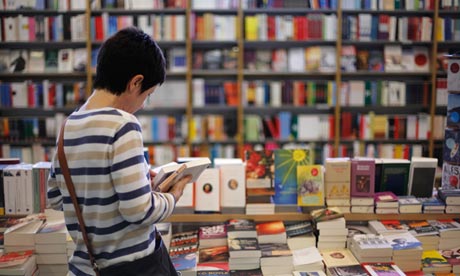
Browsing is a voyage of constant discovery. You run your fingers along the spines of the history section only to learn that the volume you’re looking for isn’t in stock. No matter. You find a fascinating book you’ve never heard of and know nothing about, a treasure upon which you happened only because you were looking for another. You pick it up, you leaf through it, you decide to buy. (Especially — no kidding! — if the smell of chocolate is in the air.) No matter how many screens you glance at online, you won’t duplicate the number and variety of volumes you can swiftly take in by spending even a few minutes in a bookstore aisle.

So much for all that. To begin with, a lot of people will understandably be uneasy about browsing because browsing means more time in the store, and they won’t want to chance infection by another customer. So maybe it makes sense that Barnes and Noble plans to remove those comfy chairs and benches where people used to sit and read. But browsing is also tactile, testing a book’s heft and weight even as you leaf through the pages. That’s going to be harder than ever, given that the chain has also announced plans to quarantine for five days every volume a customer handles. With booksellers nowadays often displaying only a copy or two of all but the most popular titles, the book quarantine will have many buyers ordering on their phones instead.

Happy Victoria Day, Canada

I’m just posting a few news bits here for the Yanks and Brits (wait, do they get a holiday too, considering it’s their humourless autocrat we’re celebrating? Go back to bed, then, guv’nors) who might show up looking for something to do other than remember it’s Monday. In Canada, the weekend past is traditionally when we celebrate the end of possible snow storms and the ceremonial opening of the Labatt products at our many cottage built on land we stole from the people who were already here when we arrived in this country looking for pristine lakes to take selfies in front of while mounted on Seadoos. Or something like that. I didn’t pay attention in the state-sponsored revisionism called ninth grade History. Definitely we were the douches, though. And every year we celebrate that by getting as douchey as possible among the natural wonders of the land we still illegally call our own.

This Heritage Minute has been brought to you by….

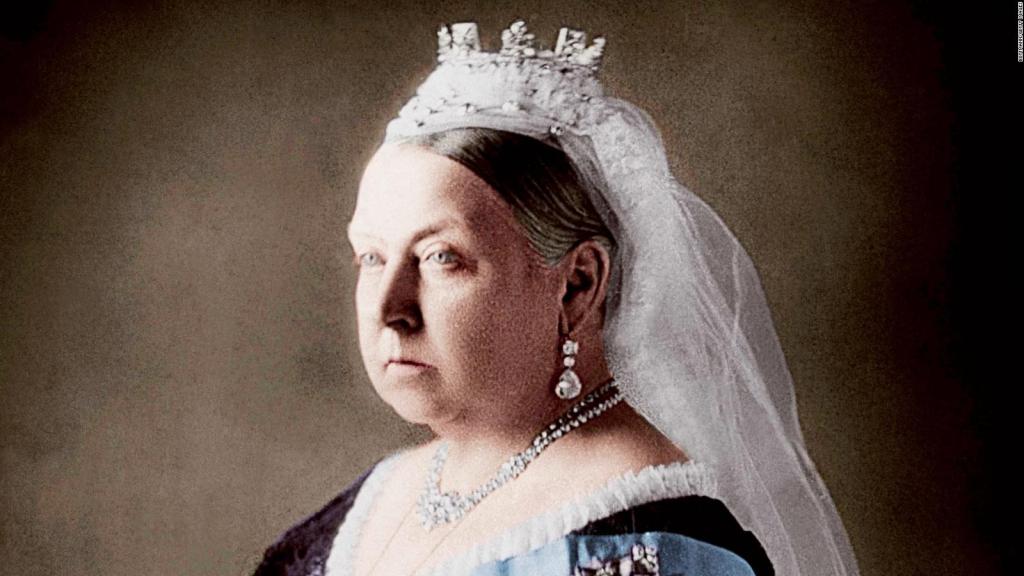
Vicky herself… Imagine the (not-real, don’t worry) right of primae noctis being evoked back then… Yeesh

Book taxonomy 101

BookRiot breaks down the types of books out there, for the uninitiated. At the first poetry reading I ever went to (bill bissett! Holy shit, was that a strange night for a young yokel from rural Ontario), a guy walked up to me and asked if I wanted to buy his new book. Trying to appear cosmopolitan while actually being just poor, I said, “Sure, let’s see it.” What he produced from his bag was a stack of irregularly cut shards of photocopied paper with a staple right through the middle. It looked like a short-order cook’s little spike with order chits on it. I said something like, “I thought you said this was a book?” to which he replied, “It is, man…” and 23 year old me was all like, “Whoa.” So I bought the damn “book.” Then the maracas came out and I was like, WHERE THE FUCK AM I? But it all worked out.

Why are they shaped the way they are? Why are there so many different book formats? How can you fit all of these different sizes of books on your bookshelf?

For that last question, I have no answer. Though that hasn’t stopped others from trying to make sense of all of these mismatched sizes.

“It is, admittedly, all too easy to take the existence of physical books for granted,” writes Keith Houston in The Book. “The sheer weight of them that surrounds us at all times, in bookcases, libraries, and bookshops, leads to a kind of bibliographic snow blindness.”

Recent news, though, has us thinking more deeply about book formats. In March, Harlequin discreetly made some changes to its mass market paperbacks; it made them bigger, dubbing the new format “mass market paperback max.” And in April, Kensington Publishing announced plans to switch its mass market to titles to the “mass max” size in September 2020.

What does all this mean? What’s a mass market paperback, and how’s it different from any other paperback? Why are books different sizes anyway? Let’s revisit the different types of book formats and why each exists.

Does being a reader mean you’re smart?

Does wearing track pants mean you run track? Narp. BUT…. On the other hand, all track stars DO have track pants, if you know what I’m saying. Anyway, CBC asks some smarty-pants types about the question above.

We tend to think that reading is a sign of intelligence, that we are improved by reading, that there are books we must read and others beneath our attention. 

But are our assumptions well-founded? Not really, according to an array of literary front runners who speak with IDEAS contributor, Barbara Nichol.

After a bookish conversation at a dinner party, she went on a quest to explore the assumptions we have about reading, readers and books. She sought out writers, critics, scholars and journalists: some of the keenest minds and most original thinkers in the literary world. 

And what they had to say is both surprising and delightful.