A book on presidential books (Bush’s presidential book will be a (right lovable, these days) pop up, and Trump’s will be a sticky VHS tape of him getting peed on);
As pieces of information, you could copy a book as many times as you wanted, or in the case of libraries, loan it out that many times. This article labels publishers as “greedy” for limiting the number of times an e-book can be checked out at the library, but I’ll bet there’s more to it than that. I understand the point that libraries could preserve books forever, but there’s all sorts of stuff wrapped up for authors too in what constitutes “in print” vs not. My hope is that some publishing types might comment with opinions here.
But why can only one person borrow one copy of an ebook at a time? Why are the waits so damn interminable? Well, it might not surprise you at all to learn that ebook lending is controversial in certain circles: circles of people who like to make money selling ebooks. Publishers impose rules on libraries that limit how many people can check out an ebook, and for how long a library can even offer that ebook on its shelves, because free, easily available ebooks could potentially damage their bottom lines. Libraries are handcuffed by two-year ebook licenses that cost way more than you and I pay to own an ebook outright forever.
Ebooks could theoretically circulate throughout public library systems forever, preserving books that could otherwise disappear when they go out of print—after all, ebooks can’t get damaged or lost. And multiple library-goers could technically check out one ebook simultaneously if publishers allowed. But the Big Five have contracts in place that limit ebook availability with high prices—much higher than regular folks pay per ebook—and short-term licenses. The publishers don’t walk in and demand librarians hand over the ebooks or pay up, but they do just…disappear.
This is a question I struggle with every day. And not just about once-acceptable, now-problematic texts/books. People, too. At what point do you just give up and let them go. Given my somewhat strident views on things, the answer for me is largely: right away. Because as this article points out, it’s mostly not worth it. But there are a few things and people I cling to, out of love more than loyalty, that I am having a hard time with. I try to use them as negative examples, or a sort of critical thinking whetstone, to shape and sharpen my own mind and heart by looking at them with eyes wide open.
We have the privilege of living in a time where thousands of new books release every single day. It’s easier than it ever has been to gain access to good stories, the kind that don’t promote harmful stereotypes or condone or promote racism. There’s really no reason to cling to books that promote awful things – and there never was.
The classification of a harmful book though, that’s what kept tripping me up. What makes a book harmful? Does a throwaway sentence or the treatment of a minor character count? Is it anything that makes you uncomfortable when you read it? Or is there a need to read books that make you uncomfortable in order to understand those who are different from you?
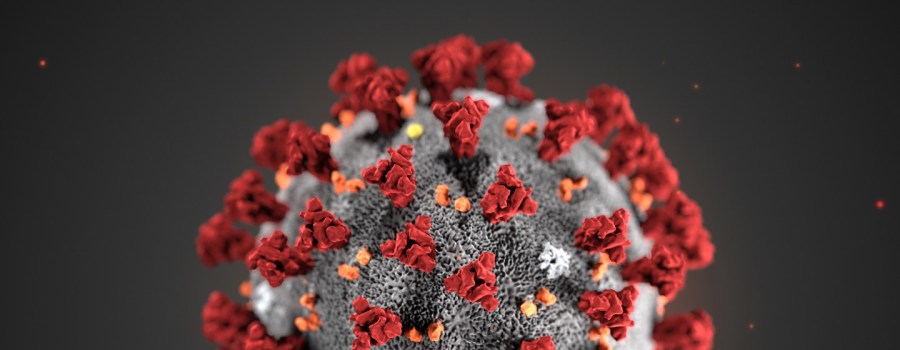
Welcome to your morning Coronavirus update. Please store this information next to yesterday’s Coronavirus update, but leave room for at least six more months of Coronavirus updates.
Today's unexpected discovery in a 1529 volume of Augustine. For future reference, we have acid free paper to mark your place. Please don't use baked goods. pic.twitter.com/YGiLDTjmSk
— Cambridge UL Special Collections (@theULSpecColl) February 21, 2020
Well, people have started working from home and society hasn’t collapsed yet. So here are a few book related links to get you through your self-isolation. I myself don’t need to worry because I got so sick of the literary world I’ve been self-isolating for over nearly 10 years, and am skilled at getting along without seeing anyone.
LAT is postponing the festival of books (you know, if things will get as bad as they say, I think the idea of “postponing” is at best overly optimistic, and at worse, a little naive);
‘I think we are in a period of stagnation. New titles continue to be published into the established categories, and readers are even more prone than before to act like sheep – that is, when they read at all, they read what everybody else is reading,’ said Indyk.
Conformity in readings habits is a modern phenomenon, where one title of genre fiction dominates local and international markets. Meanwhile literary fiction, while lauded on longlists, shortlists and deemed culturally significant, does not sell. Although some titles do buck the trend and occasionally deliver excellent sales.
‘Endangered,’ that’s what Terri-ann White, Director of UWA Publishing, suggests is the state of literary fiction.
The plain fact is Mallick has a point – or, at least, she might have had she been writing twenty years ago. There was a time when it was possible to argue that Canadian writing was mired in a kind of hidebound, sclerotic attitude that promoted historical romances and fiction that was largely static and stylistically moribund. I wrote numerous pieces forwarding this argument myself in the early to mid aughts.
It is less easy to make this argument in 2020, unless you read very narrowly and confine your focus to the handful of novels that win awards or receive heavy buzz in the mainstream press and online. Though even here, you’d run into difficulty: Ian Williams’s Reproduction, the novel that won the 2019 Scotiabank Giller Prize was a stylistically innovative, vigorous, pop-culture infused, hugely funny multi-generational family novel that would seem to tick off many of the boxes Mallick is advocating for.
To argue that novels published in this country are “not ambitious or invented or original or venturesome” displays a large degree of myopia as to what is currently being published, especially by the small presses in this country. Though even the multinationals are getting into the game: Reproduction was published by Random House Canada, an imprint of Penguin Random House Canada. Imprints of PRHC also published two of the most stylistically challenging, genre-bending novels of the previous year, Sara Peters’s prose-poetry hybrid I Become a Delight to My Enemies and Anakana Schofield’s Bina, the latter of which would seem like a perfect companion read to Ducks, Newburyport. (Granted, the book is set in Ireland, where Schofield was born, so perhaps it doesn’t qualify as Canadian in Mallick’s jaundiced eyes.)



 Bookninja