Every year there’s someone on at least one of our lists that makes people go, “Uh, are they even Canadian?” People who just got here, people who left long ago, people who’ve never been here but have citizenship for some reason, etc. I mean, don’t get me wrong, I don’t care. I love that we’re a (supposed) nation of immigrants and that we’re always bringing in new blood. That said, Canada has always been willing to call anyone with even a moderate level of success Canadian, or at the very least crow about their connection to our land of forests and moose and decent beer. Emily Bishop? She spent summers here. Ernest Hemingway? Worked for the Star. If you’re famous, you basically just need to have once stood in Vermont and pissed northward over the border into Canada and we’ll call you one of ours. That said, it’s not the case in many places, and citizenship is a requirement for many literary prizes. Should it be? Strikes me that it’s mostly there to ensure the bloated elephants of certain sleeping imperialistic cultures (coughusacough) don’t roll over on the mice bedding down next to them. Thoughts?
Did you know that approximately 7% of the people presently living in the United States are ineligible for nomination to the Pulitzer Prize due solely to the prize’s citizenship requirement?
This 7% are, according to 2017 PEW Research Center data, made up of some 12.3 million people living in the United States who are immigrants with permanent resident status, and the 10.5 million people living in the United States who are undocumented. Combined, this totals 22.8 million people who call the United States their home, but are ineligible to win one of the nation’s highest literary honors.
Of course literary awards, like any other prize or competition, must have rules. Eligibility requirements also put parameters around things like the dates between which a book has to be published for eligibility in a certain award year, for example. But why is citizenship used as a rule?
A conversation arose on Canadian-writer-Twitter last week about who is required to collect and pay HST/GST in transactions between writers and their various employers (magazines, reading venues, schools, festivals, etc.) Seems some places or events think they’re exempt because they pay in “honoraria”. Consensus seems to be that most writers who are required to collect and pay HST have run up against this at one time or another, and the information sharing was illuminating. That said, none of us are experts, so Bookninja asked an expert. Enter Artbooks. My accountant, my wife’s accountant, my friends’ accountant, and the best damn pals an artist could have. Tova Epp, our point person, takes it from here. Thanks to Artbooks and Tova for having our backs!
BN: Can you please tell us who you are and a bit about Artbooks? TE: I’ve been a tax preparer at Artbooks for almost 12 years now, and before that I was a long time client. I am an actor by training, and came to Artbooks after receiving some solid recommendations from friends in my field, and now I do those very friends taxes! Artbooks was launched over 30 years ago as Canada’s first organization dedicated to artists and entrepreneurs’ financial sanity. Artbooks is a place where we know and understand artists and freelancers, as the majority of the staff are also freelance artists. As a freelance artist myself I get to bring my own, real understanding of the life of an artist to the tax return, which I think helps me communicate with my clients in a way that they understand and that lets them feel comfortable.
BN: When must a writer collect and pay GST/HST? TE: If your gross (pre expense) revenue is close to $30,000 you must register for an HST number. That gross revenue includes all freelance income, including foreign income, but does not include grants, which are an exempt HST supply. In the words of the CRA: “If you are a sole proprietor, include the total amount of all revenues (before expenses) from your worldwide taxable supplies from all your businesses”
BN: When must an organization pay a writer GST/HST? TE: When they pay them! Basically if you are invoicing a Canadian organization you need to be your own best advocate and bill them your HST, or remind them you have an HST number. There’s a huge, common misconception about honoraria and that they are exempt from HST. They are not exempt if they are not a surprise. If you agree to do a reading for $100 in advance and the organization tells you this in advance, it’s not exempt from HST. Of course these organizations won’t pay the HST because they think they’ve found the loophole but in general we just need to do the best we can to get HST from everyone who has offered us a fee for a service. You do not collect HST on grants, and you charge any foreign vendors 0% HST.
BN: For writers who are obligated to collect and pay HST, the most common complaint seems to go like this: the festival/magazine/school/etc. says they will pay $XXX.xx for delivery of a specific service (a piece of writing, an appearance, a reading or performance, etc), but when it comes time to invoice and the writer includes their HST number and appropriate taxes to the bill, the organization says it only has the original $XXX.xx to pay the writer. The reason most often cited is that the payment is considered an “honorarium” and is therefore not taxable (effectively making the writer forfeit the money she will have to pay to taxes later.) Is this true? TE: Yes, this happens all the time. See above answer. I don’t have a solution to it, it’s just really shitty. Most festivals, etc. are non profits or are functioning on tight operating budgets and they are just not factoring HST into their budgets, which means that there’s no room on their end for extra. It’s complicated and an uphill battle for anyone who wants to fight this, because until there’s formal legislation about it, no one is going to change their practices.
BN: What are the options for a writer if an organization or venue refuses to pay HST when required? TE: Talk to their accountant…. 🙂 They can back it out of their original fee. There’s always room for a few small honoraria but if all someone is making is honoraria it gets complicaed and needs to be taken on a case by case basis. I can’t offer specific advice about this, as it’s a bit too specific….
It’s going to be super tempting to order everything from Amazon this year: you don’t have to go out into the plague, it comes quickly, it’s cheaper, and you can get everything in the one place. That said, you’re a dick if you do. Local indie bookshops have twisted themselves in knots trying to keep books in your freshly-washed hands during this whole thing, and this holiday season, you need to pay that back by spending your money there instead of putting into the latest ivory back scratcher in the Bezos collection. Will this new Bookshop.org initiative help fight back against the Amazon hegemony? I don’t know. I always assume the worst will happen. But maybe give them a try if you really can’t get out.
Initially starting with 250 bookshops, more than 900 stores have now signed up in the US. “We went from selling $50,000 (£38,000) worth of books in all of February, to selling $50,000 a day in March, then $150,000 a day in April,” said Hunter. By June, Bookshop sold $1m worth of books in a day. The platform has now raised more than $7.5m (£5.7m) for independent bookshops across the US.
“We were four employees plus me, working at home, getting up as early as we could and going to bed as late as we could, trying to make it all work. It was a real white-knuckle ride,” said Hunter. “But it was extremely gratifying because the whole time we were getting messages from stores saying, ‘Thank God you came along, you’ve paid our rent, you’ve paid our health insurance this year.’ If you’re going to have to work in insane circumstances and with huge amounts of stress, it’s good to be doing it in something you feel good about.”
Tomorrow, the Great American Experiment comes to an end, one way or the other, and the last battles of their Civil War, begun so long ago, should start to take shape. It’s the conservative vs progressive, racists vs allies, stupid vs science, misogyny vs feminism, hate vs love, money vs people, and billionaires vs everyone. And no matter which side wins, there’s going to be more than enough of all these things to go around.
Gee, that’s depressing. Let’s try for something cheerier.
Halloween is over, so cue the Christmas carols! It’s November: time for you to start mindlessly purchasing things to prop the illusion we call The Economy and ensure that you, like a tree changing sunlight to energy to live, convert your sweat and pain and allotted time into lifegiving nutrients for the world’s billionaires. Enjoy your existence, you life-support-transit-vehicle for a wallet.
It’s Friday and for some reason there’s a lot of news out of France. The calendar creeps towards the final battle of the American Civil War and a pandemic sweeps across the land, fires and record number hurricanes rage, there are murder hornets coming and now there are sinkholes full of rats appearing. It’s like Doctor Venkman said: cats and dogs living together…. Mass hysteria! So, breathe through that for a moment, then let it go, because you have two days to do something different. My suggestion is reading poems. Much less stressful. Unless they’re by Frederick Seidel. They upset me when I like them.
Always surprised to see established authors entering prizes like the CBC Poetry Prize… I haven’t submitted to this sort of thing in 20 years, mostly because I always assumed these prizes were for emerging writers and I wouldn’t want to muddy those waters… But here you go: 32 poems longlisted for the prize;
Author sues ADIDAS over use of the term “Inner Game” (maybe I should go after Nike for “Just Do It” since that’s what I say to the sound tech at every open mic reading right after I say the words “For the love of god, mute the mic!”);
So, what exactly is “Theory?” For scientists, a “theory” is a model based on empirical observation that is used to make predictions about natural phenomenon; for the lay-person a “theory” is a type of educated guess or hypothesis. For practitioners of “critical theory,” the phrase means something a bit different. A critical theorist engages with interpretation, engaging with culture (from epic poems to comic books) to explain how their social context allows or precludes certain readings, beyond whatever aesthetic affinity the individual may feel. Journalist Stuart Jeffries explains the history (or “genealogy,” as they might say) of one strain of critical theory in his excellent Grand Hotel Abyss: The Lives of the Frankfurt School, describing how a century ago an influential group of German Marxist social scientists, including Theodor Adorno, Max Horkheimer, Walter Benjamin, and Herbert Marcuse, developed a trenchant vocabulary for “what they called the culture industry,” so as to explore “a new relationship between culture and politics.” At the Frankfurt Institute for Social Research, a new critical apparatus was developed for the dizzying complexity of industrial capitalism, and so words like “reify” and “commodity fetish” (as well as that old Hegelian chestnut “dialectical”) became humanistic bywords.
I feel this way too, sometimes. In truth barely have the attention span to sustain engagement with my own work, much less anyone else’s. Partly explainable by my diagnosis last year of ADHD, but also partly because everything seems to be getting longer. Remember the half hour show? The short novel? The 2 minute pop song? The 90 minute feature film? How far does our lust for story go before it’s too far? I feel this way these days about poetry as well. A 56 page book is a beautiful thing. Enough time to establish your voice and intent before leaving the party and heading home. Of course, my book of selected poems that’s coming next year, is over 200 pages, and I can’t help wanting to cut it, but it’s got 25 years worth of poems to cover. And then there’s my novel, which is over 400 pages and counting, but it’s a fantasy, and nerds seem to like books that can keep a door from swinging shut in the wind. I sometimes wish I could just publish 16 page chapbooks for the rest of my life. But think of the cost in staples.
About halfway through Tenet, the mind-frying Christopher Nolan film, I began to wriggle in my seat. Twenty minutes later, I had to sit on my hands to stop myself digging around for my phone. At 150 minutes, not only was the film long, it felt endless. Nolan isn’t the only one stretching his legs. Other film-makers – and podcasters, authors and playwrights – are increasingly choosing languor and scale over brevity. The last Tarantino film, Once Upon a Time in Hollywood, pipped Nolan’s by 10 minutes, while the forthcoming Bond instalment – when it finally appears – is set to be the chunkiest ever for 007, at two hours 43 minutes.
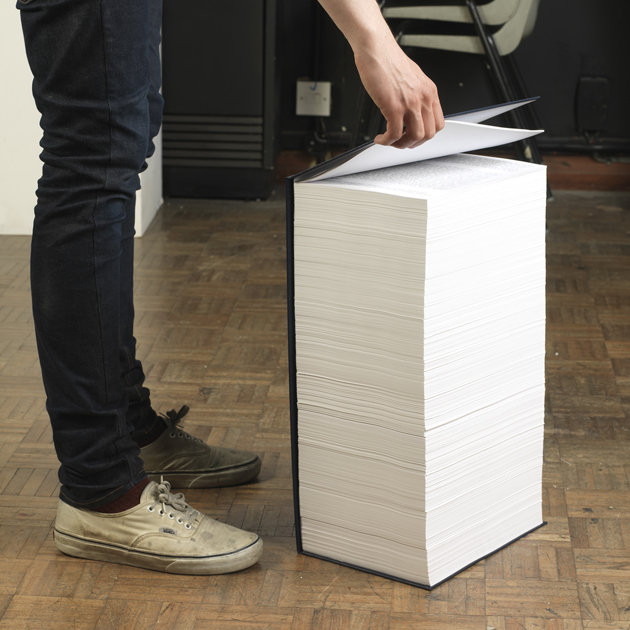
Length seems to be in vogue in other genres, too: just feel the thunder from JK Rowling’s latest Galbraith book as it lands on a table. At more than 900 pages, it’s her longest crime novel, about the same extent as Hilary Mantel’s Booker-snubbed doorstopper, The Mirror and the Light.
How would you explain American politics to young people? My speech would start like this: “See, Timmy and Sally, this is what we call a ‘torch’, and this is what we call a ‘match’. We light the match and set it to the torch, and then we get what’s known as a ‘pitchfork’ and we start looking around for rich people…” but I suppose we could try this first;
NYC’s only travelling bookshop (there used be a bricoleur-type guy who came around to my hangout in the early 90s (The Green Room on Bloor Street in Toronto before it got gentrified) with a wooden suitcase full of curated books, French cigarettes, and other oddities… I think he was a trained clown too… Memories… I miss those days);
I can’t imagine what it’s like to have a book out right now, much less having your first book be born into this shitshow of a century-in-a-year. The Star looks at a raft of gracious new writers who had to brave circumstance at what should be a moment of nervous pride. I have a new book coming next Fall and I’m already worried things will remain cancelled then. Maybe we should start profiling new writers here at Bookninja, to help offset the screaming void of inattention and apathy into which these folk are emerging.
Even during normal times, one of the biggest challenges for debut authors is getting their books noticed at all. Events such as the Toronto International Festival of Authors — running this week — are an important place for readers to discover new writers, and writers to make a personal connection with readers.
Amid a pandemic, opportunities to do book signings and speakers series and festival appearances in real life are close to nonexistent. TIFA, like many fests, is still going on but online this year, a completely different experience. We were curious about the impact on debut fiction writers appearing at the festival, so we asked them to finish the sentence: “Publishing my debut during a pandemic …” What they had to say is quietly inspirational.
For the last 10 years, science fiction literature has been radically diversifying, with more stories and books being imported from other countries, and more LGBTQ authors and writers of color being recognized and celebrated in the genre than ever before.
But what does that actually mean to the field? It’s easy to say “Science fiction is more inclusive than it used to be,” or “authors are more diverse.” But how is that actually effecting change, and what does it mean for the next decade of science fiction? We reached out to a group of BIPOC editors and curators working in science fiction what to ask what kinds of changes they’re seeing in the field so far, and what they think and hope the next decade will hold as a result of the way authorship is changing.







 Bookninja