Today’s news bits that I can’t be bothered to comment on separately (a testament to my own desire to get to work on my novel, not to their worthiness for comment.)
On Anonymous in publishing (in my day working at Coles as a teenager, Anonymous was where the guys with neck beards went … top left hand corner of the first A frame);
The Irish are like French Canadians: when it comes to the arts sector, they know how to get shit done. Here they are open-lettering their way to a more accountable arts admin world. Exciting!
I signed, along with 87 others, calling for acceptable standards of ethics and governance in the arts sector, including a workable code of conduct for anyone working in the arts in whatever form. Why? To end strange entitlement scenarios🐍and ensure proper safety & transparency. pic.twitter.com/m2q6apgXgw
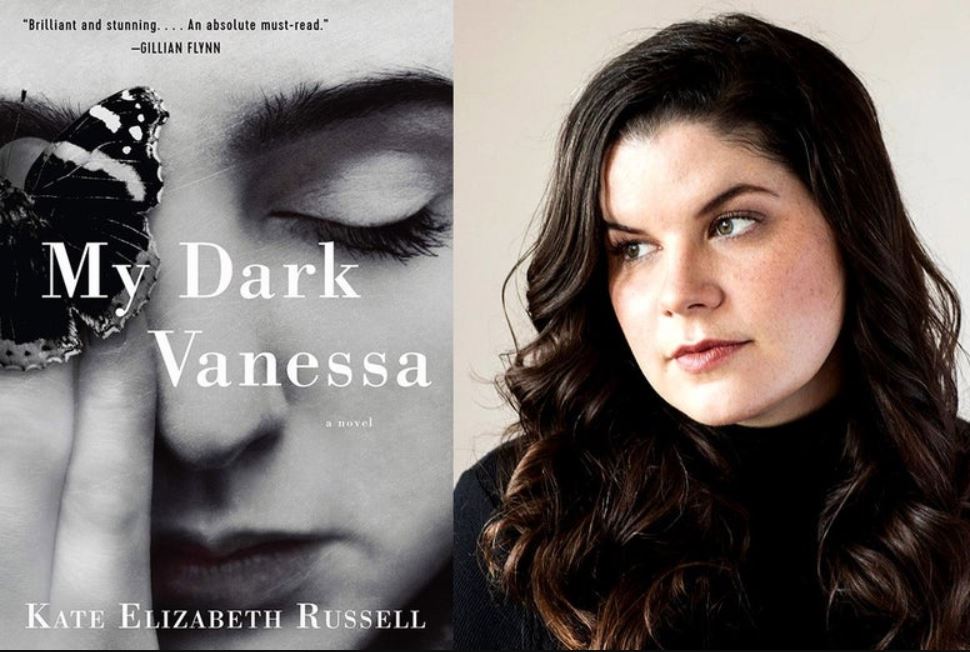
Have you guys been following this? A woman wrote a novel (“novel”?) about a music teacher sexually grooming a student for an affair (that garnered a fucking enormous advance), and a Latina author who had a similar memoir seems to be crying foul. According to this piece, the accusation of plagiarism might not stand up.
I’m going to point out a few things here and back slowly out of the room: 1) the idea that two women couldn’t simultaneously independently come up with a story of a predatory male taking advantage of vulnerable people is sort of preposterous, 2) this is not cultural appropriation, which seems a totally out-of-left-field accusation in this case, 3) as the author of the piece says, I understand feeling bummed that this woman got seven figures for her book when your book from half a dozen years earlier did not, but the problem is not the new book, it’s the publishing industry — they gave seven figures now and not in 2013 because the #metoo movement has opened up the average reader to the conversation.
And besides that: the publishing industry is like a retiree at a casino in Florida, betting the farm away on the hopes of a big payout. They drop huge sums on one book and nothing on the next and hope it all comes out in the wash. Why not spread those seven figures out and give your five best authors what amounts to sustaining funding for a few years to get five good books? Nope, it’s all get rich quick schemes.
I’ve read both books. I finished the ARC of My Dark Vanessa last year and felt winded. It resonated with me. I finished Excavation today. Are they similar? In as much as both young women are manipulated by predators, and write with the hindsight that comes with adulthood. A cursory googling of blurbs will lead you to believe that this is the same story published four years later. It is not.
Is statutory rape an intellectual property? Does one person have the rights to a story that happens to kids from all walks of life, everywhere? Whilst a novel isn’t a call to action, a raising of awareness, in the same way a memoir can achieve, My Dark Vanessa will help people process their own similar or adjacent experiences. Russell isn’t obligated to defend herself by saying “This happened to me,” but I worry she will be forced to out herself as a victim as more people flood to criticize the similarities between the two books.
So I spent part of the morning in my doctor’s office waiting to be seen — apparently doctors have cars that breakdown and need to be towed to the shop. What’s the point of going through years of school and residency if you drive a car that needs towed places? Oh, right…. “helping people.” Anyway, it means I am doing only one post today so I can get back to writing the book I’m not writing but am writing but am not but am. If you follow.
10 things you didn’t know about CS Lewis (I’m always afraid of these lists because, you know, men… I figure best case is we find out he liked to look at nuns’ ankles or something)
Is The Book Alive? (ever notice that when print sales drop you get 30,000 articles on varieties of the “Is The Book Dead?” type, but you never really get the same when sales go up?)
Never been a big fan of the average creative writing class, even though I have both taken and taught them. This guy says we need to let more mess and strangeness in and I generally agree. Actually, I see both sides of this. When I teach intro classes, I tend to focus on tradition — form, content, style, etc. — moving towards the point when we break from said same. When I teach advanced poetry, though, I like to focus on breaking out of tradition and getting a little more funky.
My years teaching creative writing to college and high school students have made me sympathetic to this tendency toward a conservative approach. I have previously written for The Millions about my commitment to teaching students about the business of creative writing. I certainly want to prepare my students for the worlds of publishing and graduate school, but I also fear Flannery O’Connor’s warning about the danger of mere competence in creative writing. Acceptable has become the new exceptional.
Art is taught in studios, but creative writing is taught in the same classrooms where we teach literary analysis, history, and business. We might be romantic and say that teacher and student need to create art through imagination, but in education, form is function. We need to shake things up in the creative writing classroom. We need to remember that writing is a messy, fractured, intensely personal pursuit that must not be neutered by the institutional needs of our classrooms.
What’s the role of literature in a time of climate crisis? My guess is “kindling” for where I live. Back in 2003 I wrote a book of poems about climate and political and spiritual crises called The Hunter. A reviewer said something like, “In 20 years, this book will seem either prescient or self-indulgent.” I feel pretty good about the results of that prediction.
But seriously, some days this question is why I have a hard time getting started at work on the book. Feels a bit like when I was an early teen and Reagan was at the button. Why bother? Maybe I need to get a nose ring and a Mohawk.
We are at a moment in time that smacks of grand enterprise gone awry. We need to back out, decide what to relinquish (perhaps highly polluting industries and a colonial conception of home) instead of scrabbling to scaffold our out-of-date dreams of paradise. And the time to do this is now, was now in 1954, and 1970 and now and now and now – there is no other time.
Writing probably doesn’t feel like the most crucial response here, and maybe it’s not. There is lots of other work to be done. But writing can help us see connections, record violence, build empathy, address possible futures. Writing in an emergency means pulling yourself back from the nostalgic deep dive. It means unwriting our lusty paradises, because they never were.
Susan Swan and Janice Zawerbny have created a new prize for women’s fiction that has a hefty purse, including, as I think all good prizes should, a significant runners-up prize. What’s neatest about this prize is the obligation for the winner to pick an emerging woman to mentor. Good thinking and classy execution all around on this one.
Swan teamed up with a friend who works in book publishing, Janice Zawerbny, in an effort to continue to level the playing field. The result is a new annual prize, the Carol Shields Prize for Fiction, which starting in 2022 will award $150,000 for a work of fiction published in the previous year by a woman or nonbinary person.
It is a sum that dwarfs the prize money for literary awards such as the Booker Prize (50,000 pounds, roughly $65,000), the Pulitzer Prize for fiction ($15,000) and the National Book Award ($10,000). The Nobel Prize for literature is one exception, with laureates receiving nearly $1 million.
“We wanted to go big on it so that people paid attention,” Swan said. In addition to the $150,000 grand prize, four finalists will each receive $12,500.
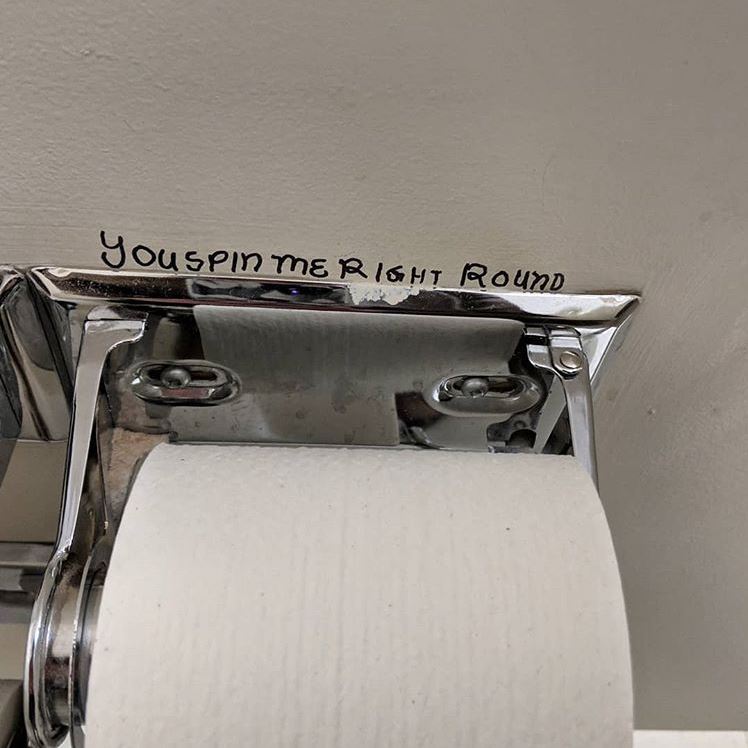
Did you know toilet lit is a thing? My friend Bridget kept an Instagram page that ended up a book of photos on called “What’s Written in the Ladies”. I find it fascinating. I particularly like the exchanges. My favourite was in a restroom at York University where I wasted 40,000 bones on a creative writing degree. It read, “JESUS SAVES!” and below someone had put a smiley with a response: “But Allah puts in the rebound.” It’s nice to laugh as you poop. The Millions has an essay on the form.
Photo by Bridget Canning
What qualifies as urinal lit? Well, technically it’s anything that someone is brave enough to scribble on a bathroom wall. I’ll admit, most of these scribbles are nonsense, as alcohol fuels a tremendous amount of urinal lit (though the same could be said, I suppose, for lit lit). Urinal lit often has a sense of urgency, as well as a clarity typically reserved for a form like haiku. The best urinal lit uses an economy of language that makes Raymond Carver seem positively prolix. The urgency of urinal lit comes from the necessary brevity of scrawling a message in a public place without being seen. Given the amount of graffiti in bar bathrooms, I’m amazed I’ve never actually caught anyone in the act.
Cover art by Gary McLaughlin, from linked CBC article
Square-jawed heroes clutch swooning women in gazebos — and maximalist living rooms and unidentified tropical locales. Meers’s scenes are typical, as synonymous with romance as Harlequin itself. But for decades, that exaggerated look of love was being mass-produced in Toronto.





 Bookninja