Are customers always right?

Nope. I can tell you that from my days at Coles as a teen. Listen, some version of crotchety Bookninja was always inside here and I didn’t hold back on stupid customers. I regret it now, of course, but it felt fairly cathartic at the time.

A single example among many: in ’92, I came back to my old job at Coles at the request of my former manager to work the busy Xmas season for some extra cash. I was 21 and I needed the money. Sue me. Anyway, when a customer waits through the 60 person line that wound around the store to ask me a question, I still naively assumed it would be a good one. But when she reached the counter, right beside a new releases shelf with the book she was looking for stacked 50 deep, she read from a piece of paper.

“I’m looking for a book for my son. It’s called ‘It Takes a Hero’ by Stormin’ Norman.”

“Oh, yes,” I replied. “That’s right behind you there on the stand. It’s called ‘It Doesn’t Take a Hero’, by Norman Schwarzkopf.”

“No, no,” she said, shaking her head sadly. “My son said, ‘It Takes a Hero’ by Stormin’ Norman.”

[Insert a half dozen more versions of this same exchange, but with different words.]

The line had grown and people were starting to grumble with impatience. Finally, I sighed, came out from behind the counter, picked up the book and held it out to her.

“Yes, you see, ‘Stormin’ Norman’ is Norman Schwarzkopf’s nickname, and he’s being modest about his role in the war, and so it’s called ‘It DOESN’T Take a Hero’, see? That’s him on the cover.”

She blinked, looked back at her paper.

“No,” she said. “It says right here ‘It Takes a—-”

You could almost hear the twig of my last fuck snapping.

“LOOK, LADY, JUST BUY THIS BOOK AND GIVE IT TO YOUR SON AND IF IT’S THE WRONG ONE I WILL PERSONALLY REFUND YOU THE MONEY OUT OF MY OWN POCKET.”

Tl;dr: customers are often jaja dingdongs. Especially in the age of Amazon.

Customer expectations that independent booksellers will do what a massive online operation does has caused deep frustration for Beverly, Mass.-based Copper Dog Books co-owner Meg Wasmer. Prior to coronavirus, most orders were placed in the bookstore, where Wasmer could put her expertise to use right in front of customers, guiding them through decisions that they might never know they have when buying online. She informs them when a hardcover is about to be released in paperback in order to save them money and helps them select the best edition of a book that will arrive fastest for a special order.

“Removing the actual experience of putting a bookseller with a customer has been a challenge,” Wasmer said. “We do this work for a reason and seeing what our industry looks like when we’re not actually involved, and how people buy books is absolutely bizarre.” For instance, since the outbreak began, Wasmer said half a dozen customers have placed orders for print-on-demand books by Mark Twain that they could have bought for a third of the price and received more than a week faster.

Like Orichuia, Wasmer stressed that the vast majority of customers are patient, but when their ordering decisions translate into delays, it has led to angry e-mails. Already feeling the effects of sustained eighty-hour work weeks, Wasmer made the decision to step away. She has posted publicly to social media about her frustration, but her business partner manages the responses to the few e-mails that are confrontational. “People are kind for the most part, once we get on the same page,” she said, “but until there’s that actual bookseller-to-customer interaction I think they forget that we’re real.”
Partners in crime

Wives, husbands, spouses, lovers, partners, life companions, romantic friends… Call it what you will, but there’s often someone hardworking, level-headed, and reliable behind great writers… like Ms. Ninja. She has a very supportive partner who makes her coffee at 9am, reads her work during the day, and brings her glasses of wine after 9pm, I hear. Now I shall duck and run for cover while you read this article. But seriously: wouldn’t it be great to have someone to do all the domestic and administrative things for you? This is why the rich folk have assistants… It helps them get richer.

Behind so many writers and thinkers, there has been a supporter, editor, typesetter, listener, advisor, child-rearer, cleaner, cook, and lover.

Many writers’ spouses have influenced or made possible the great books we still read today. Some, it’s true, have not been quite so helpful. Below are glimpses of a few relationships, ranging from the indispensable to the disastrous.

In this list you’ll find Georgie Hyde-Lees, the subject of my first novel, More Miracle than Bird. Brilliant and independent, Georgie worked in a war hospital in First World War London, had very unusual ideas about death, and took extraordinary actions to enact those ideas. But the main reason we remember Georgie’s name now is because she ended up marrying one of the most famous poets of the twentieth century, W.B. Yeats. Theirs is one of the strangest love stories I’ve ever heard.

Canada Day news roundup

I both enjoy and dislike Canada Day. I enjoy it because while we don’t live in a perfect country, by any stretch of the imagination, we live in a much better one than most — socialized medicine, gun control, social safety nets, funding for the arts, etc. I dislike Canada Day because in many ways it is founded on a pack of lies, cheats, abuses, murders, rapes, and thefts from a wide variety of minorities, with First Nations peoples absorbing the majority of damage. Here in St. John’s, Newfoundland we recently changed our June holiday from “Discovery Day” to the placeholder name “June Holiday” in recognition of the fact that no one from Europe fucking discovered anything — there were already people here who we systematically wiped out. As in: EXTINCT. Because of White colonialism. (America, you need to do this with Columbus Day.) Eventually our June holiday will be renamed to something like “St. John’s Day” (also problematic) or somesuch, but really it should be named in some way after the Beothuk in recognition of the wrongs done. A remembrance day for reflecting on, not celebrating, the legacy of colonialism and genocide inflicted on the first peoples of this land. Canada-wide, I realize it will be many years before this sort of thing happens, but I really hope Trudeau will stop just talking a good game and make some real reparations and changes that make Canada Day worthy of our full attention.

Stay on target

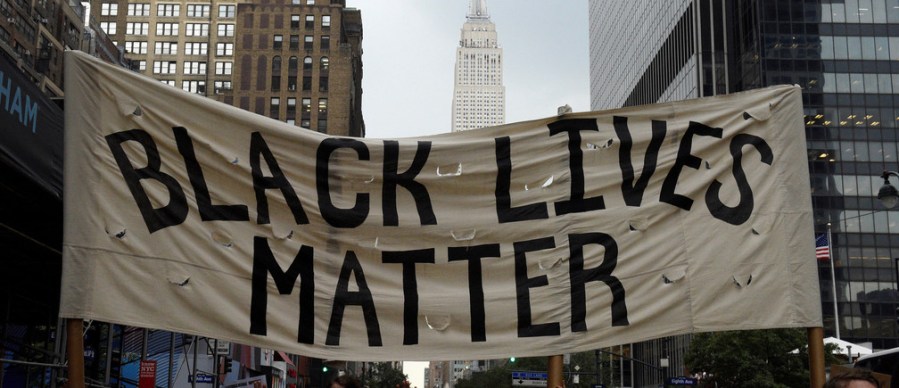
I notice there’s suddenly much less coverage out there about the unrest in the USA. Got to keep up the momentum because the system is predicated on the will of the people running low, on exhausting the anger and inertia created by it. Where I live is historically a very White part of Canada, and the protests here are reflective of that, but the BIPOC population is growing in both numbers and voice and things are changing in bits and pieces. It’s odd to be so sheltered from it all when my friends in NYC, Philadelphia, Chicago, and etc., do all the work. Here are some articles for context on how our industry is facing change (not ideally, it turns out). Regardless, change is coming. We just have to make sure it happens before the newscycle tries to move on. Let’s start with an article to remind everyone that racism isn’t just an American thing:

Friday bits and pieces

Our daughter is moving back to St. John’s from Montreal today (her and her asthmatic boyfriend are literally fleeing the poor decision-making of that government and the bizarre behaviour of the people around this virus) so we’re going to be a bit busy. Here’s some news to see you through to Monday.

Reading: you’re doing it all wrong

Nothing better than articles that come along to tell you how those things you enjoy an do daily aren’t being done well-enough. Read slower, read faster, read more, read less. How about this? Go buy some books until the stack starts to teeter and when you get through those, think of which ones you liked best then go find others like to replenish your Wobbly Jenga Tower of Books. You can always tell its a slow news day when someone comes up with a “how-to-better” article for something everyone visiting a site dedicated to books is already doing. Like Cosmo and sex tips that always end up sticking-your-pinky-up-someone’s-ass, or Guns and Ammo and shooting-your-child-in-the-face-while-cleaning-your-supposedly-unloaded-gun.

These days, time is certainly not of the essence and, like most of us, I find myself with more than enough hours in each day. But how to make two pristine, never even been opened books last until the shackles are loosened, the doors of bookstore are left unlocked and the mask washed and put away until the next pandemic? Impossible I grant you.

But there is a way to extend the reading of a book. I will learn from that all-the-rage slow-cooking method and attempt to apply it to reading. This way perhaps I can make these long anticipated novels last far, far longer than usual.

What’s behind the nuttery of book-banning?

What makes a frothing nutbar get up at a school board meeting and start screaming about protecting the children? I mean, besides low intelligence and blind adherence to a dying ideology? Oh, according to this little article, that’s about it. Wouldn’t mind a more in depth look at this psychology/sociology behind this. It can’t just be the mind-control device embedded in each MAGA hat.

There is no logic or reason motivating these book-banning parents. Their quest for “inappropriate books” to censor stems from the fears shared by parents everywhere: the fear of losing control over one’s children. Not being able to supervise their children’s reading translates to the parent’s realization that their children may read something the parent never wants their child exposed to. The fear and anxiety of some parents are clear: they never want their child to adopt any alternative lifestyle or stray from the strict societal norms.

Laser gun post chock full of nerd pews

by Paul Vermeersh

It’s a glorious time to be a nerd (fewer gut punches and wedgies, in my experience) and I’ve recently re-embraced my dweebheritage by diving fully back in where I left off in my late teens: Dungeons and Dragons, scifi novels, and video games. If we could only get the more toxic end of the fanbase to STFU, things would be a lot nicer. I’m always amazed that people who were once marginalized (albeit mildly by comparison) are so interested in passing that on to others. Like those dudes who get knocked around by their moms or dads and then grow up to hand it out to their own kids. Bizarre. But perhaps, I thought, besides fighting the negative, we need nerds like me to speak up more about the positive . So I give to you some positive snapshots from my recent nerdlife:

Last night, for instance, just as I was completing the main questline Fallout 76 (my fourth run at the franchise), I wondered, what draws me to this sort of post-apocalyptic dystopia over say, something more hopeful? Well, the internet is always there with an answer (note: this is a libertarian site not known for its unbiased reporting, but I stumbled across this article that I at least enjoyed a bit of, so decide going in whether you want to hold your nose and read).

Dungeons and Dragons has gone to a good place in trying to cut the white/large boobs in chain mail bikinis/hetero bias/cultural insensitivity over the years, and seem to still be learning how to make the game even more inclusive. When my group of middle-aged, forward-thinking folk, finished our run throughThe Curse of Strahd last fall (a very well designed adventure) we kept wincing at the depictions of the Roma-like Vistani (don’t even get me started on Tomb of Annihilation). But that’s all being changed. Bravo, you glorious geeks.

Of course, in terms of misogyny and sexism, scifi still has a lot of catching up to do (cf, any Conan The Barbarian cover from the 70s/80s, any Piers Anthony novel of the same vintage, etc etc et al etc.). I’ve been rereading classics from my youth: Solaris, Dune, etc (and Foundation will be next), and let me tell you, some of it hasn’t aged well. But at least people are starting to ask what about body-positivity in the genre?

See, everyone? It’s not that hard to admit you were wrong and make changes. Evolution does it without conscious effort, this learning from mistakes, but culture needs intention. Keep growing, you crazy dorks!