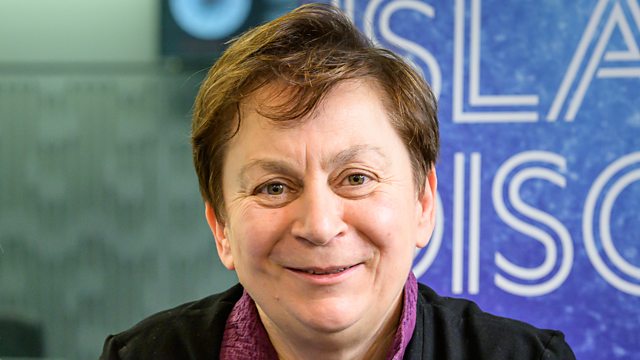
Lorna Goodison to receive Queen’s Gold Medal for Poetry (1/ I didn’t know there WAS such a thing, 2/ Good thing we kept her face on coinage so she’d allow Canadians get medalled, 3/ I launched my second book way back in 2001 with Gooodison and she was lovely and talented in every way so I’m glad to see this);
We have certainly made progress in critical-thinking education over the last five decades. Courses dedicated to the subject can be found in the catalogs of many colleges and universities, while the latest generation of K-12 academic standards emphasize not just content but also the skills necessary to think critically about content taught in English, math, science and social studies classes.
Despite this progress, 75 percent of employers claim the students they hire after 12, 16 or more years of formal education lack the ability to think critically and solve problems — despite the fact that nearly all educators claim to prioritize helping students develop those very skills. Those statistics were included in Academically Adrift, the 2011 book by Richard Arum and Josipa Roksa, which caused a stir when the authors asserted that students made little to no progress in critical-thinking ability during their college years.
With perils mounting, many of them attributable to too little critical thinking about the subjects that matter most, we clearly must do more to ensure today’s students become tomorrow’s skilled thinkers. Fortunately, we are in a position to do so without having to overturn the current higher education system or break the bank.
You know, I was just talking about this a couple weeks ago and was wondering: will we get a new Gen X out of this generation of kids growing up with fear of the world ending? I was 12 when Reagan took control of the button. I knew what DEFCON 5 meant before I’d kissed someone. I had a whole plan for how to rise to the top of my Red Dawn/Mad Max ragtag-crew-of-survivors so that I might lead them strongly, but fairly, into a new life in the radioactive wastelands of the 905. To this day I have a secret fetish for survivalist equipment. Seriously, I have a cupboard with those carbon filter straws, foil blankets, and other survival crap in it. That said, no one tried to torture me at bedtime with colourful books about it. They just left me alone to read the Dungeon Master’s Guide over and over at night, falling asleep wondering if I was going to wake up to the ground shaking and a bright light that melted my face. I don’t know. We couldn’t do anything as kids in 1982. But these books seem to be telling kids today that they CAN do something, and that’s positive, I suppose. But also perhaps a bit daunting. “What do you mean I can do something? I’m 8. Why the fuck didn’t you do something, Dad?” Anyway, maybe we’ll get some grandkids we can relate to out of this.
Mangan fears that the moral instruction in environmental non-fiction is too obvious, not least because “there is only one stance that 99% of scientists and writers would want to take so there’s not much room for doing anything with it”. She says: “Children’s literature began with a desire to instruct but if it had stuck to its guns we wouldn’t still be reading it.” The “golden age” of children’s literature only arrived when authors such as J M Barrie to Edith Nesbit cast off Victorian moralising and wrote from a children’s point of view. “Moralising doesn’t get you very far,” argues Mangan.
Environmental fiction for children aged 10 and above and dystopian novels for young adults are also proliferating in this age of anxiety. At BookTrust, Coleman has particularly enjoyed The Dog Runner by Australian author Bren MacDibble (who lost her home in a wildfire) and Run Wild by Gill Lewis, a vet who tackles complex wildlife themes in her books, from the persecution of birds of prey as well as bear-bile farming and endangered gorillas.
Can this outpouring of environmentalism capture children’s imagination without terrifying them? I test some books on my eight-year-olds. We read Pankhurst’s worthy-sounding Fantastically Great Women Who Saved The Planet. To my surprise, Milly and Esme love it, and I do too: it is funny and interesting, telling stories not just of westerners such as Jane Goodall but also Wangari Maathai, from Kenya, and Isatou Ceesay, from the Gambia. A few days later, Milly tells me they’ve discussed Pankhurst’s story of the Chipko movement in the Indian Himalayas with their teacher. “In the Chipko movement it starts off with one person and then they all protect a whole range of trees from being cut down,” says Milly. “Even a tiny difference makes something big.”
Do you read Anne Enright? She’s genius. It’s time for me to shut up, because she’s speaking.
More seriously, she wanted the novel “to reclaim ideas of agency in desire”, something she has been doing throughout her fiction, along with other female Irish writers from Edna O’Brien to Rooney. “To push back against the idea that sex is a terrible thing, horrible and rapine and always somehow disappointing and wrong. It’s an idea from the misogynistic patriarchy that returns and returns in more modern iterations. A lot of bad things happen to women in books. Really a lot.”
Having written about adultery in The Forgotten Waltz, she also wanted this novel “to be a conversation about marriage”, to make a monogamous long-term relationship interesting. “The truth of my life has been that I must now announce myself to myself as having been happily married, whatever that is,” Enright says. “Why does no one write that?” She is at her merciless best on the daily intimacies and irritations of married life. “I liked the shifting sense of difficulty and accommodation and attachment. And that inescapability of it all,” she explains. “There’s an amount that is written about love and sex that seems to me somehow partial. So I wanted to give a more complete picture.”
We just got 25 cm MORE snow (we’re over three meters since Christmas), and I’m about to lose my fucking mind because of it. So enjoy my grumpy news gathering!
This article is a good larf. A woman had to inform her mom that “jizzing on” didn’t mean “egging on”. I have had similar conversations with my Irish dad. The world change. People don’t. (Though, in fairness, the things my father says are usually either paradoxical weirdnesses — “He’d be dead 20 years now if he’d lived to Friday” or complete fabrications, like seeing the word “facsimile” and pronouncing it “fashismile”… The 90s were difficult.)
The Irish playwright Richard Brinsley Sheridan would be delighted if not perhaps surprised to learn that the malapropism, a word inspired by his character Mrs Malaprop in his 1775 play, The Rivals, to describe a similar sounding word misused to comic effect, is still alive and well and entertaining people on Twitter.
Sheridan sadly did not come up with a character – let us call her Mrs Jizz – who made a habit of uttering words whose meaning has over the course of a generation or two changed from innocent to lewd.
These twin strands came together this week in an entertaining Twitter thread, which started off with this revelation by @punchedmonet_
“My mam said the words ‘jizzing on’ as in she meant ‘egging on’ and I had to tell her not to say that cus it means something else and she was like what!!! but honestly I don’t know how she invents these things.”
Similarly, @miscfionn recalled: my art teacher in secondary school used to always tell us to “jizz things up a bit”.
Judging by the state of my house, I’d say any more than two books at a time. Seriously, we probably have 3000-5000 books in this house, overflowing from the damn shelves and into boxes in the basement that haven’t even been unpacked since the move-in seven years ago.
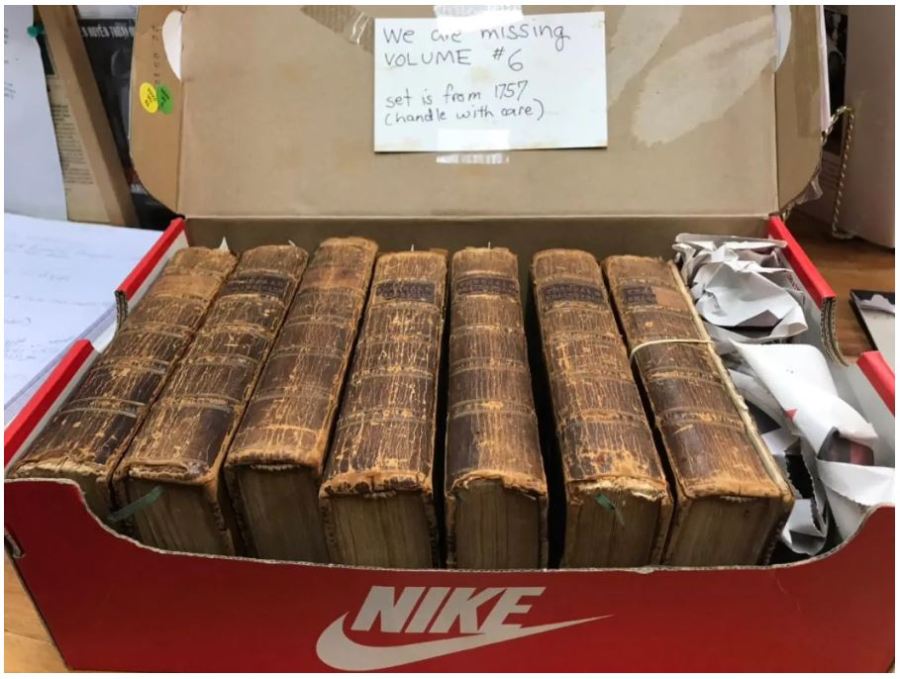
The new head of the New Brunswick Public Library Service got rid of a significant collection of books at the Kings Landing library when he was in charge of the historical settlement, according to a former employee.
Darrell Butler helped build up the Kings Landing library over more than 40 years as the chief curator and manager of heritage resources.
The books dealt with topics such as the history of agriculture, wagons, furniture and ceramics, and staff used them for research and reference, said Butler.
“The books were very specialized and, well really, they were collectors’ items, some of them individually worth over $100,” he said.
But in 2016, when Kevin Cormier was the CEO of Kings Landing, Butler discovered some of the books for sale at Value Village in Fredericton.
Actually, it’s sort of one of many. But let’s focus on this one from the Guardian: You can’t be a writer unless you can afford it. Speaking as someone currently living on grants and credit, I don’t know if that’s true. But what IS true is that I can’t be ONLY a writer unless I win a lottery or find out I am the illegitimate lovechild of Bill Murray and sole heir to his fortune. (Guardian is making you register now to read the articles, for some reason, but you can register easily with Google or Facebook and it’s free after that. What’s another company having your info mean if you get to read articles about how terrible your life is?)
Once, before a debut novelist panel geared specifically to aspiring writers, one of the novelists with whom I was set to speak mentioned to me that they’d hired a private publicist to promote their book. They told me it cost nearly their whole advance but was worth it, they said, because this private publicist got them on a widely watched talkshow. During this panel, this writer mentioned to the crowd at one point that they “wrote and taught exclusively”, and I kept my eyes on my hands folded in my lap. I knew this writer did much of the same teaching I did, gig work, often for between $1,500-$3,000 for a six to eight-week course; nowhere near enough to sustain one’s self in New York. I knew their whole advance was gone, and that, if the publicist did pay off, it would be months before they might accrue returns.
I did not know what this writer, who I thought was single, paid in rent, or all the other ways that they might have been able to cut corners, that I, a mother of two, could not cut, but even then, it felt impossible to me that this writer was sustaining themselves in any legitimate way without some outside help. I thought, maybe, when they said “write” they might be including copywriting or tech, as some others that I know support themselves.
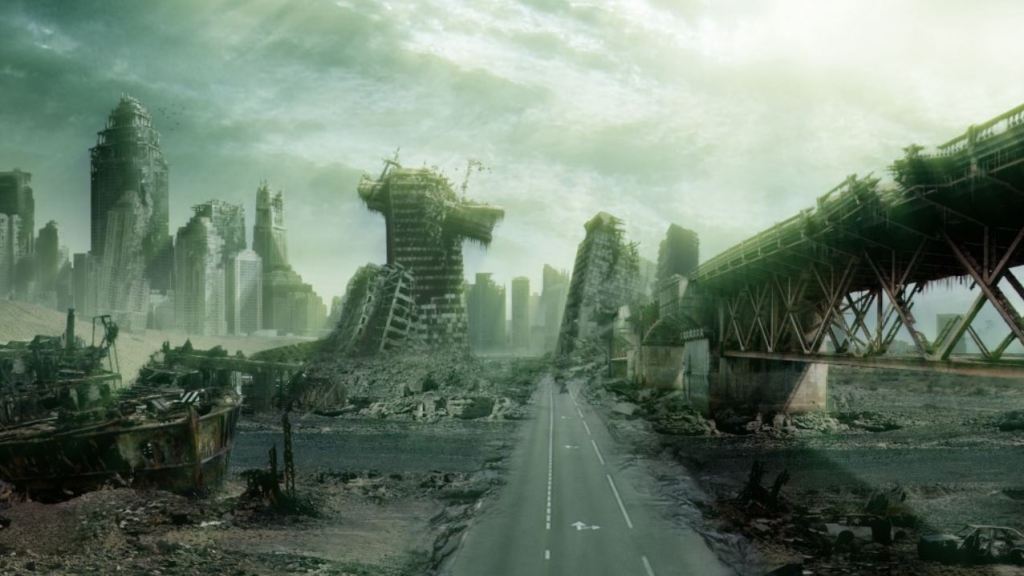
Listen, people, I need to get something out of the way: I live on an island in the middle of the North Atlantic for a reason, so, bear with me a moment while I outline something. I really don’t want you to take this the wrong way, but if this virus turns into some version of the zombie apocalypse, especially given the SPECTACULAR SHITSHOW that is the American response to its advent in the States and the fact that our government can’t even follow through on some basic election promises much less take its mind off oil long enough to think of other things, I’ll be advocating for locking down the airports and docks and riding this motherfucker out while you all die. No offense, but I have not only done a lifetime of post-apocalypse reading, I’ve also played four of the five Fallout franchise games, and I am totally prepared to don some studded leather outfits, trick out my Mazda 5 with wheel spikes, and spray paint my teeth chrome. And before you even think about getting on a homemade boat and paddling over this way to escape, just remember, I’ll be waiting on the beach with a shotgun modified to shoot alternating rounds of rock salt, penicillin, and shrapnel made of Black Horse beer bottle caps.





 Bookninja