Zadie Smith, someone who looks like Hermione from the movies, and that guy with the eyebrows who came along while I was gone are up for the Folio Prize;
This wee Vermont paper marvels at the change in the modern library. Sometimes when I see things like this, I am both happy that the American public still receives the occasional article about intellectual pursuits, and sad that this article wasn’t appearing 10 years ago when some of the idiots now voting down there were still young enough to be educated.
Though these murmured conversations, rustling pages and clicking of digital devices did not exactly equal silence, every patron on all three floors of the Fletcher Free was in shush mode, as if a librarian with finger to lips stood before them. As if this place were considered sacred. Yet when a gaggle of children burst through the front door with unrestrained outdoor voices, no one looked up. The bubble of excitement soon disappeared into a kids’ yoga class.
Anyone who has ever entered a library is familiar with this scene — the self-enforced hush, the attitude of tolerance, the freedom of access. But if you haven’t been to your public library in, oh, the past 10 or 20 years, you might be surprised by how things have changed.
Did you know that Russia had its own Doctor Seuss? It sure did. This was, of course, back when its main exports were grimaces and despair instead of porn stars, mob money, and the puppeteering of intellectually hobbled US Presidents. Classics include: Hop on Comrade Pop; The Cat in the Gulag; Red Eggs and Ham; One Fish, Two Fish, Red Fish, No Groceries Today; and To Think That I Saw [Redacted] On Mulberkov Street.
Let me tell you something about children’s poetry: people tend to create it for the right reasons. I was taught this concept in connection to medieval lyric poetry. My teacher’s point was that art made in the modern world is under scarcely any obligation to be good. It can be interesting instead, or new. Or it can “bear witness.” Being good—actually good—is even considered a little passé.
The minute you bring a six-year-old into the picture, though, everything changes. She doesn’t care whether what you’re doing “serves as a useful critique.” She wants it to be good. Consequently, if I’m in a used bookstore and I see a book called Thai Children’s Poetry or Setswana Children’s Poetry or Inuit Children’s Poetry, I pretty much buy it on contact. One wants to know: Does Botswana have a Dr. Seuss? Does Thailand? ’Cuz if they do, I need to know about it.
Russia had a Dr. Seuss. Same deal as ours, except his hot decade wasn’t the fifties; it was the twenties. There’s a lot to be said here.
Look, down there through the killing floor…. We’re going to pack it all into a sausage casing and put in on a bun. Your eyes will be the ketchup bottle and your attention the ketchup. Enjoy your lunch…time reading!
Besides police racial profiling, horrific comments section posts from basically everyone in Alberta, and the near-weekly news that our hot prime minister going back on his election promises (such as proper reconciliation with indigenous peoples), there are other reasons for Canadians to remember we’re not so high and mighty when it comes to progressive thinking: 29 books that have been challenged here;
Why do found texts fascinate us so much? Reader Hans commented on Facebook recently that he in fact collects used books with long, personalized inscriptions…
As I tell my kids: when a space you’d like to occupy either excludes you or doesn’t exist, make your own. Bravo/brava, good people of Tragic. Inclusive spaces in Philadelphia for the win!
I named my Philadelphia reading series Tragic: The Gathering because of the cheeky wordplay related to the popular collectible card game Magic: The Gathering, yes, but also to poke fun at the expectations placed on literature from trans writers. There’s nothing tragic about the energy in a room of people laughing and vibing and responding to Kayleb Rae Candrilli’s work about gender euphoria at the beach or Gen Z audience members suddenly reevaluating the professional wrestling their dads watched in the 80s because of Colette Arrand showing us the homoerotics of the squared circle. And there’s nothing tragic about Raquel Salas Rivera disrupting binary notions of what a literary reading is by reading all their work in both Spanish and English—Spanish first.
When a crowd comes together to feel fully themselves and show out with looks to prove it, as in lii xu’s head-to-toe floral prints, Noor Ibn Najam’s fishnet crop top, or Lily Kulp’s vintage faux fur, it’s a powerfully uplifting experience, and I started Tragic: The Gathering in part because I needed a series like this.
There’s a guy I know here who is self-published, mostly through Amazon these days. He writes military scifi and has built himself enough of an empire to live off his royalties from Kindle. More power to him. We chatted recently and when he asked what I was working on and I told him a fantasy novel, he perked up. “How long is it and how long has it taken you?” he asked. At the time I said, “150 pages so far an I’ve been at it for two months.” I was frankly pretty proud of the turn around time. “Hey, that’s decent. I write one every three months.” I said, “Excuse me? A whole book?” He said, “Yeah, and that’s slow. If I wanted to really work the algorithms, I should really do one a month.”
Well, my friends, I can tell you that I left that conversation with a lot to think about. The worth of art versus dollars being foremost among them.
If you google the words “self-publishing stigma,” you’ll find enough material to fill a book.
The search results for this phrase are packed with articles and blogs, many of which pose similar questions: Where does the stigma around self-published fiction come from? Is it justified? And as the years roll by, is it finally starting to fade?
While questions over writers’ and publishers’ attitudes to this type of fiction may be up for discussion, though, one thing seems pretty clear: A whole lot of people read self-published books.
And a whole lot of writers are making money from selling them.
Canadian book magazine The Quill & Quire has announced a set of awards for Canucks in the industry. Lots of great potential here for people working in publishing and selling, but but no librarian or book blogger love. Remember back 10 years ago when Bookninja used to do the Golden Shuriken Awards for Bad Behaviour in the Book Industry. Well, I’m retroactively removing any attention I ever gave to industry magazines in retaliation. Take THAT, Q&Q. God, I so desperately hope the trophy is a Heather bobble-head.
Canadian publishing is filled with many dedicated and creative people. While we regularly celebrate our best writers and books, recognition for individuals or entities who make vital and interesting contributions to our industry has been missing for some time.
It is time to celebrate outstanding work in the industry with a new awards program.
The comedian and columnist had never read Gone with the Wind by Margaret Mitchell. She picked it up recently but felt it was a struggle.
The novel’s worldview was hard for her to take —and it got Palmater thinking how she as a reader should treat problematic “beloved” books of the past and books by problematic people. She stopped by The Next Chapter to talk about what’s a reader to do when it comes to controversial classics and problematic authors.
“I give myself a little challenge every year that I should at least have five classics in my yearly reading list. I had never read Gone with the Wind. I’ve never even watched the movie, even though I love old movies.
“I was expecting it to be dated. What I was not expecting was, seven pages in, that the whole notion of slavery was right up in my face. I was in some kind of a dream world. I didn’t realize the depiction of slavery would be so blatant and casual in the book.
I struggle with this as well — the desire to overly curate my children’s lives by funneling books I consider “valuable” into them like a kale smoothie. There are times I curse the day we ever let the fast-food burgers of Big Nate or Captain Underpants into this house. We’re almost through this phase (three of the four have grown up and gone off into the world reading good books), but the littlest one is near 12 and mostly wants to read graphic novels and Manga (which wouldn’t be so bad if he would read the ones I want him to…. But I’ll be damned if these genetic vessels of mine didn’t turn out to be willful little shits like their dad.)
Aside from having to do some parenting around Manga’s gratuitous violence, body image, visual sexual innuendos, and, frankly, consent (get it together Japan), I also suffer from a some sort of instinctual disapproval of the idea that passing your eyes over these books constitutes “real reading”. But having been through this before, the fourth kid is getting the benefit of my accrued wisdom (and exhaustion) and is largely being left to his own devices when choosing books.
Don’t get me wrong, I still give him books I think he might like, but I try to not pressure him into reading them anymore. Won’t work. I’m just happy he’s getting narrative into his head. The best thing we can do is model reading. Let him see us reading, tell him about what we’re reading, read in the living room with him, etc.
When a child finishes a book they love, they don’t see how challenging it was, they see that they finished it and all of the pride which comes with that. On the other hand, when they attempt a book which doesn’t engage them or that they find too challenging to finish, they will feel that strongly and you run the risk of turning them off trying again with something else.
You should also not discount how important engaging with art is for their cultural development. Illustrations offer a huge amount in the way of context for the story as well as just being something that should be enjoyed in its own right!
But at the end of the day, none of this really answers your original question. My advice to you is twofold. First, try to take what I’ve said above on board and by changing your attitude towards the books your son is choosing you might lessen the anxiety it is causing you. And second, if you still want to try and move them on, baby steps are the way to go.
At a reading in Cambridge this past fall, Ann Patchett said in passing that she doesn’t believe in acknowledgements. During the question and answer period, I asked her why. She explained that she feels it’s better to thank the important people in your life by giving them a copy of your novel in which you’ve written a personalized inscription. If nothing else, she added, a private inscription saves the author from the possible future embarrassment of having her book forever tagged with the reminder of a friendship that has faded away. But Patchett’s deeper concern seemed to be that the handwritten acknowledgement was more sincere, free of the performative element of a thank you that will be publicly reproduced every time the book is printed.
This article on the worth of the acknowledgements page (you know, where the author is supposed to ostensibly thank those who helped in the creation of the work at hand but in actuality mostly just wants to keep talking after the book is done) is interesting to me. Even moreso is Ann Patchett’s belief that they’re impersonal and ineffective for expressing gratitude. She’d rather pass along a copy of the book with a personal inscription of thanks. I get that. It sounds nice.
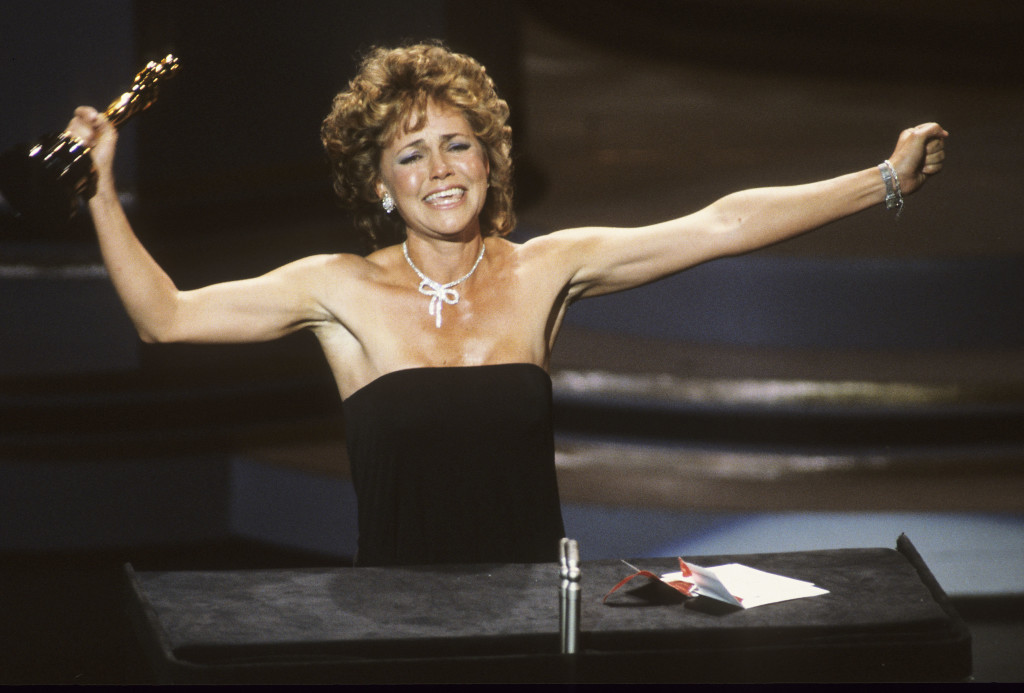
In fact, I’m all about trimming out the dross and scaffolding in books — especially the stuff that smacks of affectation and ego: I don’t use author photos, try to keep my bio short, eschew dedication pages, etc. etc. and generally weed my acknowledgements page down to a short paragraph, whenever possible. (Don’t get me started on those three page acknowledgements that are the literary equivalent of a rambling Oscars acceptance speech full of in-jokes and semi-clever accolades for people’s mere existence… And then there’s the cohort-claiming and name-dropping done as a marketing ploy… But I digress.)
That said, I think they’re still necessary.
Despite romantic tropes claiming otherwise, writers don’t work alone. My partner supports and edits me and I not only want to thank her, I am obligated to; my friends do as well and they deserve recognition for the free work they do to help me get paid; my editor works hard on the book, and while he gets paid for his work by the publisher, he does go above and beyond for me all the time (howdy, M); magazines and journals that published my poems in early draft took a chance and acted as incubators for my work (you never know how good or bad something is until you see it in public — frightening); and finally, when working under arts awards and grants, I receive investment from several levels of government, that that needs to be acknowledged so people who like my book feel positively towards these programs that help writers produce.
So, despite my instinct to go Marie Kondo on the guts of my books, I can’t do away with the acknowledgements page yet.






 Bookninja