You are living in a George Saunders story

2020: the year of Saunders. Or if you’re Canadian, Peter Darbyshire. But I digress. The important part here is that years ago I ordered a pizza and this bedraggled dude who is obviously a grad student making extra cash shows up at the door with the debit machine and my pie, and as I’m fiddling with the machine he says, “Hey, do you know who George Saunders is?” I looked up in surprise and said, “Uh, yes, of course.” He paused a moment and said, “Are you him?” Then it was my turn to pause (and touch my forehead to feel if I had any hair at all left). Why can’t I be mistaken for Brad Pitt or something? Oh, right. The sallow, ageing redhead thing. Sigh.

We live in dystopian times. This seems undeniable as we’re locked down in a pandemic exacerbated by government ineptitude, corporate corruption and widespread disinformation. (If all that wasn’t enough, we also have murder hornets heading our way.) We should have been prepared for this after decades of dystopian works — 1984, The Hunger Games, Blade Runner, Terminator, etc. — but while these works led us to expect how dark and deadly our dystopia might be, none of them prepared us for how fundamentally dumb an American dystopia would be. Huxley can’t ready you for a reality TV president screaming in all caps on Twitter. Orwell doesn’t warn you of protesters in athleisure ware doing push-ups to demand gyms reopen during a global pandemic.

But there is one author who predicted these dumb and absurd times: George Saunders.

Want to know how to create new words during crisis?

Ask women, they’ve been at it a while now.

Perhaps it’s not so surprising that it should have been women, who historically have all-too-well understood the paralysing parameters of enforced distancing (and not just social, but economic and political as well), who were compelled to fashion new words to cope with the feeling of being cut off from the pulse of life.

Taking as our inspiration such gifted wordsmiths as George Eliot and Jane Austen, Charlotte Brontë and Dorothy Wordsworth, perhaps we can distil some helpful principles – some New Rules, to do a Dua Lipa – for sculpting a vocabulary to describe the surreal realities that will surely come to define these tense and trying times.

Caught en flagrant délit

French author who writes about serial killers has had his lifetimes of lies catch up with him. If there’s one thing I’ve learned over the years, it’s that lying is (almost) never worth it. I try to impress this upon the kids: there’s never just “one lie”. It’s like a cancer. It needs to take over and kill everything or it fails.

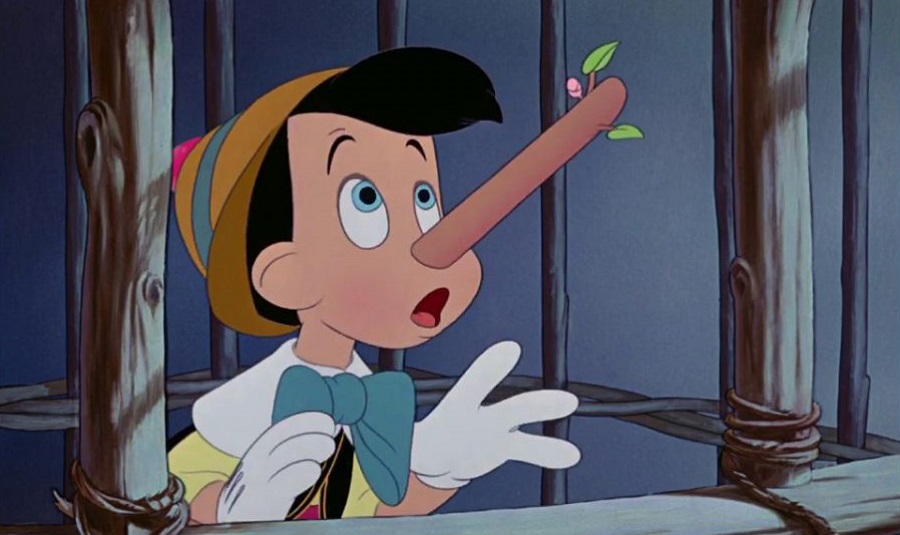
I mean, thank God they clarified things by adding those leaves at the end, amirite?

Bourgoin is the author of more than 40 books and is widely viewed as a leading expert on murderers, having hosted a number of French television documentaries on the subject. He has claimed to have interviewed more than 70 serial killers, trained at the FBI’s base in Quantico, Virginia, and that his own wife was murdered in 1976, by a man who confessed to a dozen murders on his arrest two years later.

But in January, anonymous collective the 4ème Oeil Corporation accused him of lying about his past, and Bourgoin has now admitted to the French press that the wife never existed. He also acknowledged that he never trained with the FBI, never interviewed Charles Manson, met far fewer killers than he has previously claimed, and never worked as a professional footballer – another claim he had made.

“My lies have weighed me down,” he told Paris Match last week in his first interview about the accusations. “I have arrived at the balance-sheet time.”

Some primers on poetry

If my inbox is any indication, lots of people who either didn’t used to read poetry or said-they-did-but-actually-didn’t, are starting to pick up those skinny, $20 books out of either sheer boredom.

BookRiot offers some basics on reading and reviewing:

If you’re a student or new reviewer first approaching the task, you may be wondering how to write a poem analysis. Fortunately, there are concrete steps you can take to analyze a poem or collection of poetry. Even if you do not plan on learning how to write a poem analysis essay, building a routine of analysis into your poetry reading can deepen your appreciation for the genre.

Poems have many layers of meaning. A particularly beautiful and well-crafted poem only becomes more enjoyable the more you increase your understanding of the decisions the poet made to craft it. The following steps outline the kinds of questions to ask yourself while writing a poem analysis.

While The Millions looks a little deeper:

More than rhyme and meter, or any other formal aspect, what defines poetry is its self-awareness. Poetry is the language which knows that it’s language, and that there is something strange about being such. Certainly, part of the purpose of all the rhetorical accoutrement which we associate with verse, from rhythm to rhyme scheme, exists to make the artifice of language explicit. 

Having trouble following through?

A psychologist explains why it’s so hard to concentrate on reading right now. (Dudes, just pay me $75, half of what a psychologist will charge you, and I’ll tell you all the same things, but without an education to back it up. I may also throw in a free hug.)

Something I’ve heard quite often during the pandemic is, “I can’t read anymore.” That’s mostly because I write a recommendations column where I match people with books to suit their moods, and the mood a lot of people are in right now is “terrified, angry, and sad,” which makes it hard for them to focus on anything, even a book.

For people who are used to self-soothing with a favorite novel, the inability to read is a loss. A small loss, given the scale of tragedy we are all dealing with right now, but a loss nonetheless. So I wanted to find out more about why the state of constant anxiety so many people are living in has left a lot of us unable to read.

On giving away your books

You know, every now and then these sorts of articles come up and for people like me they are cathartic tragedies. Look, some people turn to movies-of-the-week or Hallmark for their sappy, weepy fare. I read stories about people giving up their books. Speaking of which, what will happen to the thousands of poetry books I have collected over the years when I finally decide I need less space to live in? Well, hopefully my grandkids won’t tear them up for wallpaper. But maybe that’s not a bad idea. I used to go to an Irish bar on West 4th in NYC before the KGB readings — Swift, after Jonathan — and they’d decorated the can by shellacking pages from the novels to the walls. So as you were standing there pissing out your expensive pint from Sean, you’d end up fondly rereading some passage or another. I made a point of visiting all the urinals, over time. The Irish really know how to jerk the nostalgia chain.

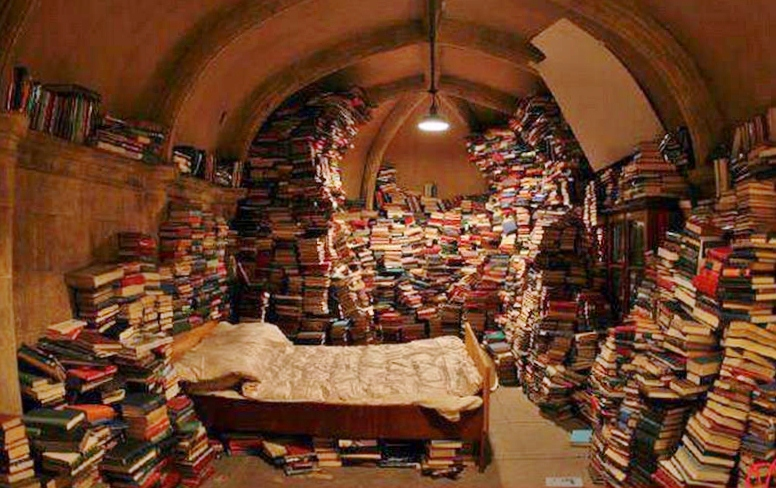
If there’s a silver lining to living in virtual lockdown, it’s this: Plenty of time to attack those lists of “things we should do around the house.” Which is how we came recently to complete a book purge, ultimately donating 27 boxes to a used bookstore, getting rid of six overflow bookshelves in the garage and moving two others back into the house. Now, for the first time in two decades, we can park in our two-car garage.

It was a bittersweet experience. With the bitter outweighing the sweet.

Hump dump news

Halfway there, my weekday sober friends. We’re closing in on Friday when you can get yourself tanked enough to forget about the shitty state of the world for a few hours. Why does Friday even matter anymore? Don’t ask that question. It’s because we are the keepers of the flame of civilization. We will take the ideals mask-wearing self-restraint and carnal-forbearance into the future populated by day-drunk, track-pant-wearing. bad-hair-having post-apocalyptic mutants. We’re heroes, you and I. Heroes.

Gary Barwin on creating connection

Poet and novelist Gary Barwin performs some thought experiments every morning to cope with everything. He’s basically a smart guy who does a lot of strange thinking that I admire. So go read.

I’ve recently learned — too much — about how we all radiate moistly, a giant web of moistness spreading madly off in all directions.

But I’ve also learned that we radiate connection, too. We humans are communication specialists. Interaction technologists. Even the most introverted of us. We send and receive thoughts, feelings and experiences like some kind of fleshy modem. I feel like a single penguin thinking about being huddled together with a thousand other penguins. At least that’s what it says on my dating profile. 

But by sending and receiving, we know where we are. We know who we are. Even if it means we’re someone who has forgotten to get out of pyjamas or brush our hair.

I’ve been calling this “conscious community.”