Pulitzer starting to look more like America

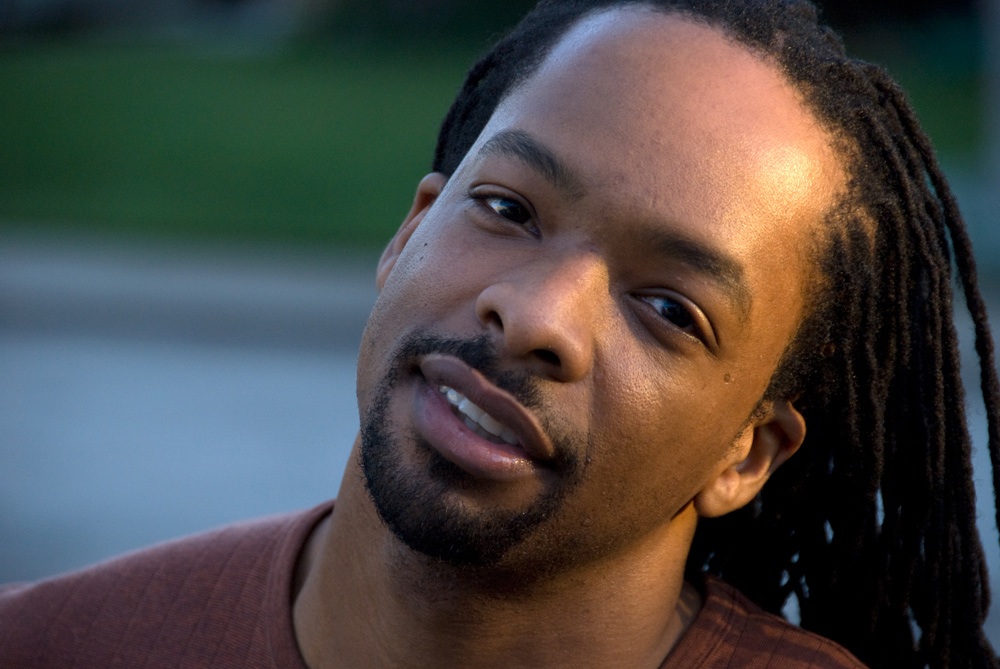
A new, young, black administrator reveals why things are changing. On a personal note, the working American poets I am most fascinated by are queer poets of colour, like Carl Philips, Jericho Brown (who won this year), Eduardo Coral, Ocean Vuong, etc.

When scrolling through this year’s list of Pulitzer Prize recipients, one thing immediately stands out: the sheer number of Black winners. There is The Nickel Boys, Colson Whitehead’s devastating fictional account of the true story about life at the Dozier reform school, which won for fiction. A Strange Loop, Michael R. Jackson’s semi-autobiographical musical about an aspiring playwright trying to write a musical about an aspiring playwright, secured the win for drama. The Tradition, Jericho Brown’s heartfelt collection, won the prize for poetry, while The Central Park Five, Anthony Davis’s spellbinding opera about its titular group of wrongfully convicted Black and Latinx boys, took home the prize for music. Add to that wins for Nikole Hannah-Jones, who took home the commentary prize for her contributions to The New York Times’ “1619 Project,” as well as a special award for the late investigative journalist and Civil Rights leader Ida B. Wells, and it’s clear that Black art was finally getting its due.

It’s something to be proud of for Dana Canedy, the administrator of the Pulitzer Prize since August 2017. As the first woman, first person of color, and youngest person to ever hold the position, the former New York Times editor has spent the past three years painstakingly working to diversify this prestigious organization in all facets. And while her contributions have been apparent from the very beginning—it was after she took the role that Kendrick Lamar’s DAMN. took home the 2018 Pulitzer for Music, after all—nothing has felt quite like the 2020 results.


Brace for impact

So, the numbers are coming in for the first quarter in publishing and they’re not as terrible as one might think. But look, up there above you: it’s the other shoe, and it’s about to drop. Actually, it’s an anvil being hauled up by a rope for some reason. No, wait, it’s a steel safe. I stand corrected, it’s a piano. A grand piano. Right over your head. Now we have reached full tragicomic potential. But is there hidden opportunity in here?

In the days before the lockdown began, Waterstones reported a 17% uplift in sales, a rise that has only grown in the weeks since; a central irony, for publishers, has been that in the moment when books have been suddenly more difficult to get hold of, demand for them has never been higher. A recent survey suggested that 40% of people say that books have helped them get through the lockdown. All publishers report a dramatic increase in traffic on their websites, and in ebook and audio sales. Online sales at Waterstones are growing 30% each day; as I write they are up some 1,500%, a long line of Royal Mail trucks queuing outside its warehouse every night, where there used only to be one. “It’s still a relatively small proportion of the sales that were coming out of our shops,” says Daunt. “But hopefully, customers can now see that online is not a monopoly.” Publishers are unsurprisingly thrilled by this. Can Amazon’s monopoly be broken? “One thing that must come out of this is a model where online selling is more plural,” says Stephen Page.

The real Lord of the Flies

I read this fascinating piece over the weekend about tracking down the story of some real-life school kids stranded on a rock in the ocean for 15 months. Turns out no one died or got beat to death (it’s always the redheads that get it, poor Simon) or had their brains spilled after someone said “Sucks to your assmar.” In fact, they handled it quite well and were little gentlemen to the end. The Lord of the Flies was the book in grade 9 that taught me what “symbolism” was, in its sort of heavy-handed way (which is what 14 year olds need, really), and I still love the book. It helped me throughout life to think: be more like Ralph, less like Jack (another redhead… we’re only good for killing and being the bad guy, apparently). But, as a kid who grew up during the Reagan admin and who thought he’d have to one day preside over a tribe of wasteland warriors eking out a life in the harsh desert of destroyed rural Ontario, I did think it was wise to keep a few Jack moves in my back pocket. Turns out you just need to be stranded only with other Ralphs to make it work. Throw a Jack in there and shit will hit the fan (made of palm leaves and coconut batteries, I’m sure).

I first read Lord of the Flies as a teenager. I remember feeling disillusioned afterwards, but not for a second did I think to doubt Golding’s view of human nature. That didn’t happen until years later when I began delving into the author’s life. I learned what an unhappy individual he had been: an alcoholic, prone to depression; a man who beat his kids. “I have always understood the Nazis,” Golding confessed, “because I am of that sort by nature.” And it was “partly out of that sad self-knowledge” that he wrote Lord of the Flies.

I began to wonder: had anyone ever studied what real children would do if they found themselves alone on a deserted island? I wrote an article on the subject, in which I compared Lord of the Flies to modern scientific insights and concluded that, in all probability, kids would act very differently. Readers responded sceptically. All my examples concerned kids at home, at school, or at summer camp. Thus began my quest for a real-life Lord of the Flies. After trawling the web for a while, I came across an obscure blog that told an arresting story: “One day, in 1977, six boys set out from Tonga on a fishing trip … Caught in a huge storm, the boys were shipwrecked on a deserted island. What do they do, this little tribe? They made a pact never to quarrel.”

On what’s wrong with the Pulitzer Prize

(Read: most awards) The Baffler takes on the Pulitzers and cronyism in journalism. Huh, so you’re saying that awards don’t always go to the most deserving individuals and that the game is rigged against certain people? Never considered that here at Bookninja.

It is not an entirely new criticism. As J. Douglas Bates wrote almost thirty years ago in his book The Pulitzer Prize: The Inside Story of America’s Most Prestigious Award, the prizes are a product of cronyism and mutual benefit; the prizes elevate the publications, and vice versa. Bates noted that the Pulitzer board of directors would change from time to time, but that when there was turnover, it was usually “white, male, senior journalists” being “replaced by more white, male, senior journalists.” The board chooses the jurors for the prizes each year. And though there is more diversity on the board and among jurors (the board is led by the eminent Elizabeth Alexander, head of the Mellon Foundation) than there was when Bates wrote his book, a cursory look at the Pulitzer board reveals precisely the incestuous relationships that make it all possible. The current list includes David Remnick, editor in chief of The New Yorker and the very man who hired Taub to work at The New Yorker in 2017, two years after he finished graduate school.

Such hefty institutional backing has a relationship to truth-telling and to truth creation. It doesn’t matter that Taub, per his own admission, did not speak Arabic, that he seems to have rehashed a large chunk of his Pulitzer-winning article from an already published book, or even that he spent only a week in Mauritania where Salahi now lives. His article legitimizes a process through which the Western liberal frame is conflated with the lack of any frame at all and applied to foreign places or people through the roving foreign correspondent. Ben Taub is not the problem, of course. It’s just that the edifices of elite journalism consistently elevate the voices of those like him. In a story about how a system of silencing allowed the most shameful cruelties to happen, considering the architecture of truth and silence seems important.

Morning, sunshines

I keep a Slack chat open with a group of buddies all day and we spend time in there joking and chatting and complaining. This morning I suggested that Mondays should begin with a sock puppet show to gently ease you into the week, explaining that not only isn’t it the weekend anymore, but that it is time to sober up and start doing the things you are expected to, accompanied by a primer on what those things are. “You are a ______. That means you do things like _____, ______, and _______. And if you don’t do these things, you will die impoverished and alone.” Then the puppets would hand you a coffee and say, “Take your time. So long as you’re at your desk by nine.” Here’s hoping a browse through news of the shitshow that is our world acts as that puppet show for you today. Up and atom!

Planning out your classics reading during the pandemic

Admit it, you thought you were going to really cut into the list of books-you-always-meant-to-read-but-never-did-and-yet-still-pretend-to-at-parties, but here we are, two months in and you’re mostly scouring the house for old Far Side compilations and reading the back of cereal boxes like when you were 8. Well, here’s a primer on how to thematicize (?) your schedule and get yourself started on that pile of classics that looms over you like your-impending-mortality-after-a-life-of-failure. Enjoy!

If you are the kind of person who likes to embark upon a project in times of stress, there are worse choices during quarantine than trying to read your way through a bunch of the classic great books. Reading a book can take you out of yourself and your situation for a while, and nourish your mind in a way that more passive entertainment might not. Plus, finishing a book you’ve always meant to read but never quite got around to will give you a warm glow of virtue.

(It’s also absolutely fine to decide not to do anything productive right now. It’s a global emergency! Do whatever you have to do to get by! This article is just for people who respond to anxiety by giving themselves homework.)

But if your only plan is to read books you vaguely understand to be classics, the idea of starting can be overwhelming. Where to begin? How much work are you committing to? Do you even have the attention span to read right now? So I’m here to offer you a strategy.

I’ve organized some of the go-to great books into a few different categories, based on how much work they’re asking of you. Decide what level of concentration you’re ready to commit to right now, and then work from there.

On access and e-books

Some interesting info here from BookNet on new accessibility initiatives in the ebook world. A lot of this is way out of my wheelhouse, but I like to wideband things on this issue that is finally getting some attention. Mostly I don’t read ebooks, and for me accessibility largely means the chance to go to book conferences online or have books delivered with groceries. Glad to see this work being done.

In March 2019, the Canadian federal government announced a $22.8 million budget, spread over five years, to support accessible publishing in Canada. This was the apex of many conversations among book publishers, ebook developers, accessibility service organizations, librarians, and publishing support organizations about accessibility in digital publishing. And it was thrilling and inspiring.

We’re at an accessible publishing tipping point — in Canada, and more broadly in publishing. There’s a metric tonne of good work happening right now in many different quarters. I will encapsulate what I’m aware of here but if I am missing something, please do correct me. I welcome hearing about other projects.

America’s smallest indies

What goes on behind the scenes at small bookstores? I mean, besides the silent weeping and fantasies about robbing the bank next door?

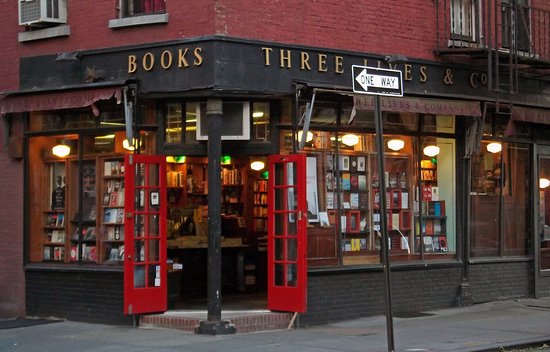
Many small bookstore owners welcome the opportunities presented through increased online communication. Mary Swanson has owned the Bookloft in remote Enterprise, Ore., for 30 years, and she employs many of the techniques described by Ineson. She keeps a diverse array of products, changes displays, and mixes new and used books throughout her store, which also has a café and locally made arts and crafts for sale—all in 1,000 sq. ft. of space. Though Swanson consumes industry news and information, she has only been to BookExpo twice. “Winter Institute always sounds appealing,” she said. “But I live in a mountain valley, so getting out in January or February isn’t possible.”

Through choice or adversity, many small bookstore owners also have to embrace a willingness to consider drastic changes. After 18 years in the same location, Diana Portwood of Bob’s Beach Books in the coastal town of Lincoln City, Ore., recently moved her store, downsizing to 1,200 sq. ft. while also making it Americans with Disabilities Act compliant. Working five days per week in the store and two days handling paperwork and ordering from home, Portwood said that the move was challenging but worth it. “I pay myself a salary,” she said.

You made it once again

You made it to Friday! Cross that off your list. Actually, that might be a great way to get something done at least once a week. Add “Make it to Friday” to your to-do list and then every Friday enjoy the satisfaction of having actually crossed something off. Make it to Friday. Ahhhhhh. Don’t forget it’s Mothers Day on Sunday. Not that you’re going to be able to do anything with Mom. Maybe, you know, just fucking look after yourself like a responsible adult and stop letting her do the lion’s share of care-giving, you ungrateful bastard.

As a reward for your survival, I’m going to try to make this news dump without a single Covid story in it… Can I do it? Stay tuned.