You know what no one wants? Your Coronavirus fiction

As I’ve said before, go ahead: write it. Get it out. It’s like the boogie-woogie in a Johnny Lee Hooker number…. It in you, and it got to come out. But why in the name of God are you turning around and rushing to publish it for sale? Oh, right, stupid people and their money. The Millions is already making fun of you.
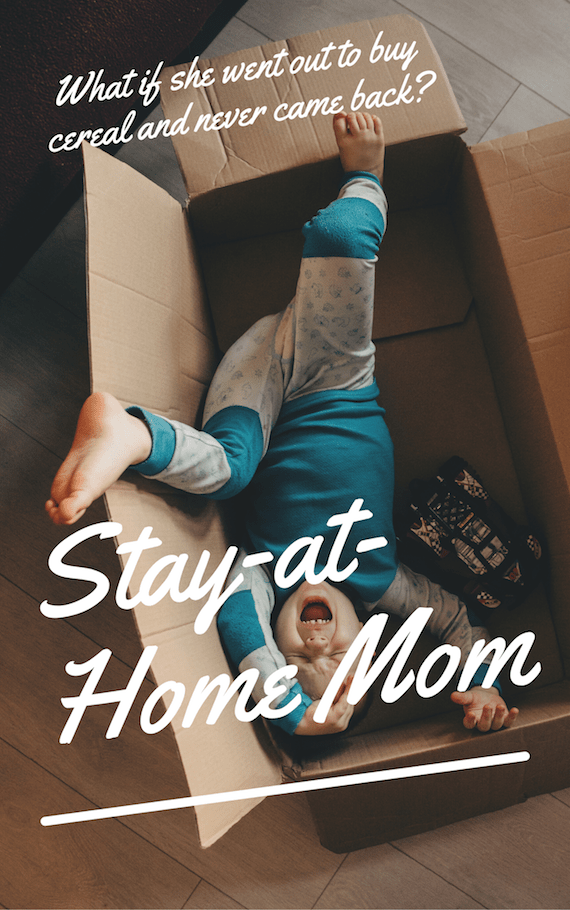
Image from The Millions

Stay-at-Home Mom

It’s been almost two years since Hannah gave up her career in publishing to raise her daughter, Olive, and three years since she put on anything besides maternity jeans. Her pelvic floor sags like a hammock and she can’t remember the last time she didn’t smell like curdled breast milk or didn’t stay up until two a.m, leaving snarky comments on various Mommy message boards. But all this seems frivolous now that she and her husband, Ben, are quarantined with Olive in their cramped Brooklyn apartment as the coronavirus brings New York to its knees. When Ben isn’t locked in the bedroom making his glitchy conference calls for work, he’s riding anxiety attacks about the state of the world and begging Hannah to don their single dingy surgical mask and gloves to pick up yet another box of Honey Nut Cheerios. With nothing to do but occupy Olive and appease Ben, Hannah feels her sanity crumbling. Then she misses her period. Faced with another possible pregnancy, she can’t stop thinking about the episiotomy she begged for when Olive was born, and which she and Ben are still paying off via their health insurance’s installment plan; how when she masturbates, she can’t get fellow BabyCenter user MomtoMaddox447 out of her head; how Olive looks so much like Ben that Hannah wants to vomit; that sometimes she imagines cutting off her own arms and legs and hoisting her bleeding torso into her rollaway suitcase and zipping it up (with her teeth) and rotting there forever. And how all this is better than her old publishing job where she was regularly expected to kiss the egomaniacal asses of Bookstagrammers who never read the novels they posed next to succulents and mugs of bone broth. What if she contracted coronavirus, just to be alone? What if she went to buy cereal and never came back? In the tradition of Jenny Offill’s Dept. of Speculation and Lydia Kiesling’s The Golden State, with a soupçon of Ali Wong’s irreverence and Cardi Bi’s social media sass, Stay-at-Home Mom is an unflinching and pitch-perfect portrayal of motherhood during our biggest contemporary crisis. Ask yourself, are you a good mom?
What books do kids like best?

Duh… Ones that tell them things they need to know about the world. As opposed to adults who already know too much and would like to forget it. Shows how the survival instinct wanes, I suppose.

The study suggests that children may lean toward causal discovery in books because of its intrinsic rewards.

Figuring out an explanation for how something works might lead to dopamine release, which is the brain’s response to pleasure, Shavlik said.

“There’s sort of a connection that when children are seeking explanations and when they finally understand the explanation, they feel there’s a chain between some mastery over some part of the world,” said Dr. Dipesh Navsaria, an associate professor of pediatrics at the University of Wisconsin–Madison and the medical director of Reach Out and Read Wisconsin.

Hump dump

It’s the Wednesday news dump. If you’re counting down to the weekend when you’re allowed to drink again, you’re halfway there. You’re also a chump. I’m drinking basically every night right now and I feel it’s not only essential, but earned. So enjoy your Earl Grey and your hump dump, chump.

A very special episode of Letter from the New York Times Books Editors

This is misty-eye-making for those of us in the business, even if it amounts to a secular “thoughts and prayers” type thing. It’s nice to have some paper-of-record recognition that your world has a soupçon more flaming shit in it than the next guy. I’m so glad I don’t have a book coming out this year. Even the one I have coming next year is frankly up in the air. If you’re a Bookninja pal/reader with a book coming out now, send me an email and I’ll see if I can’t note it here.

Apart from the obvious life-and-death matters at stake, we at the Book Review are especially concerned for those whose livelihoods depend on books. We think of the authors whose book tours have been canceled, authors who depend on income from teaching, authors who need money from speaking engagements to supplement their advances. All of those opportunities, temporarily — and in some cases, permanently — gone.

Our hearts go out to the debut authors of the season, many of whom spent years, perhaps a lifetime, waiting for the dream moment when their first book would make its way into the world. We think of the authors whose publication dates have been delayed, complicating not only their financial lives but all other plans, professional and personal. We think of the authors whose new books are coming out right now, at a moment when the realities of everyday life can feel all-consuming, and when libraries are shuttered and many bookstores have closed or laid off workers.

Hey, desperate homeschooler

Are you looking for guided reading lesson plans? [opens trenchcoat**] I got your guided reading lesson plans right here for real cheap like. (I know what you’re thinking…. You’d prefer UNGUIDED reading plans so you can get some shit done. But who are you kidding? You’re not getting anything done except growing new cellulite and making terrible memories you’ll one day force your grandchildren to listen to. So just go read with your kids.)

Guided reading is a method of literacy instruction that is generally done in a small group setting in a way that allows students to encounter and understand ideas and concepts they have not seen before. Working with their educator, readers might go over previously read text or words, apply known reading strategies to new texts, and/or engage in conversations about what they have read.

For parents or guardians interested in working with their student, my recommendation would be to start by reading new texts together and then discussing what you’ve read. For younger kids, this might mean having them read some new sentences from an age-appropriate text that makes use of words they already know.

**

GoF***Me (over)?

Times are tough and indie bookstores are turning to GoFundMe campaigns to ask for loyal customers’ and supporters of the industry’s help. But what happens once the money is collected? A shit show, it appears.

Growing numbers of indie bookstores in the U.S. are turning to GoFundMe to raise funds to pay expenses like payroll, rent, and utilities to stay afloat in the absence of customers this spring. But some bookstores are having problems actually accessing those funds.

High-profile booksellers seeking recourse have flocked to the platform, including City Lights Books in San Francisco, probably the most famous indie bookstore in the country. Elaine Katzenberger, publisher and CEO of City Lights Booksellers & Publishers, launched a GoFundMe campaign on Thursday to raise $300,000 for the iconic institution, which was founded by Lawrence Ferlinghetti in 1953. Its headline was blunt: “Keep City Lights Alive.” By Monday morning, the campaign had raised more than $450,000, a seemingly rousing success celebrated immediately online by the literary world—just as it previously heralded Ann Arbor’s Literati Bookstore’s success in raising $100,000 in just 48 hours through the platform.

Yet a number of the stores that were among the first to launch successful campaigns in the wake of the novel coronavirus pandemic are complaining that, to date, GoFundMe has not released the funds promised them. 

Tuesday Newsday

** The name “Poets & Writers” used to always stick in my craw. Poets are different from other writers? Now I see that this is true. We are better.

On John Brunner, prophet

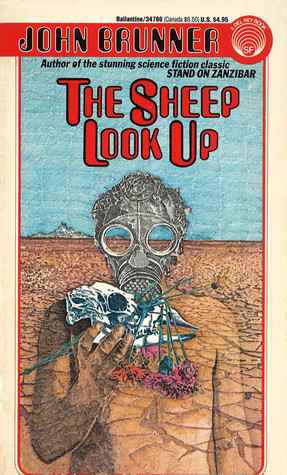
You know, I have been recently rereading some scifi classics I read as a kid and boy, was I really not ready for some of them back then. Not sure I’m ready for some of them now. Solaris, Left Hand of Darkness, Steel Beach, A Canticle for Leibowitz, etc. But I think the best among them instilled my liberal values. The Sheep Look Up is one I am just about to come back to (having read it when I was maybe about 17?) and I found this BBC piece from last year declaring Brunner a prophet for our (pre-Covid) times.

In 1972, he published one of his most pessimistic novels, The Sheep Look Up, which prophesies a future blighted by extreme pollution and environmental catastrophe. And his 1975 novel, The Shockwave Rider, created a computer hacker hero before the world knew what one was. It also envisaged the emergence of computer viruses, something that early computer scientists dismissed as impossible. He even coined the use of the word ‘worm’ to describe them.

Today, his name is little known beyond sci-fi aficionados, and he’s chiefly remembered for Stand on Zanzibar. Big, ambitious and formally experimental, it’s a science-fiction thriller that depicts a world confronting population control. By 2010, Brunner declared, the world’s population would top seven billion (he was a year out – this actually happened in 2011), and in his fictional world, governments have responded globally with draconian eugenics laws, harnessing genetics to determine who can and cannot be allowed to have children.

When magazines rule the Earth

Lapham’s has an interesting article looking at some ambitious early magazine projects that thought way outside the gutter.

The grandiosity of these ideas required a certain minimum of power that editors today do not possess. Though not every editor saw his ambitions fulfilled, these three forays show how magazines first experimented with their sway over readers’ tastes, dreams, and buying habits. In the interwar period the salesmanship became even more brash—probably because print had lost its dominant status. Harper’s Bazar (as it was then spelled) advertised gift packages curated by the editors and Parisian shopping itineraries designed by their expat fashion expert. Today we might be affected by the same hunger for a product endorsed by Better Homes & Gardens, the Wirecutter, or Young House Love.

But what would we be seeing if making a profit were less of a burden? What if media tastemakers had, once again, a measure of financial and reputational influence to bet on visions of the future? Today entrepreneurial rather than editorial innovation suggests an answer: Washington Post owner Jeff Bezos’ ten-thousand-year clock and spaceport, for example. Alternatively, branding feeds more branding until the point of collapse, as was the case of Trump University or the Fyre Festival.