Is writing like sculpting?

A personal essay on being a writer married to someone married to the slow work of stone.

My husband contends that little separates our creative worlds, mine stationary and his physical. After all, don’t I spend the day banging my head against the corner of the desk, trying to make a sentence, just like he bashes his own thoughts into meaning? Maybe so, but I maintain that the comparison ends there. His artistic life consists of the transference of ideas to the tactile world through the medium of mostly igneous rock. Every cut he makes is deliberate and joyous, an action with a purpose: to tame the stone and the edges into an object that exists already, one that – maybe decades ago – took shape in his head. His tools provide him with a sense of measure, balance, and even logic because they guide him to the sculpture’s inevitability. He’s an artist, who offers an object of beauty for people to love or buy, and he needs to justify the space it will take up in the world.

Columbus thefts

And not the ones where he steals entire continents from people just trying to not die of smallpox. Someone has been stealing from libraries around the world various letters written by Christopher Columbus and leaving fakes in their place. 60 Minutes has the scoop. Someone call Nancy Drew, Scooby Doo, and the Scottish guy from Broadchurch who always looks like he’s about to have a disapproval-induced heart attack.

If there is one library in the world you’d think would be impervious to theft, this would be it. The Vatican library in rome houses a vast and unrivaled collection of historic treasures. It is the pope’s library, home to manuscripts going back nearly 2000 years. The library is closed to the public, it’s a place for scholars only. But Ambrogio Piazzoni, the vice prefect, invited us inside.

It was here in 2011 that Vatican officials first discovered that one of their prized items, a Columbus letter, had somehow been stolen and replaced with a fake.

On the importance of Edith Nesbit

Edith Nesbit is one of the world’s most important writers. She has entertained and inspired generations of us. She put the best of herself into her books for children. Some of her closest friendships were with her young fans and she often wrote them into her stories. A strikingly attractive woman with a keen sense of fun, she attracted a circle of admirers who left fascinating accounts of her in their letters and memoirs. As Marcus Crouch points out, “no writer for children today is free of debt to this remarkable woman”. CS Lewis borrowed his wardrobe from one of her stories. JK Rowling identifies with her more than any other writer.

You’re so vain

What happens when people in your family think your characters are them?

As a mother, daughter, sister, wife, neighbor, the selection process for a writer can be agonizing. I remember with my first novel, I couldn’t shake the comments that the overbearing husband in my story must be my real husband. They came from neighbors and friends. It was over the top. A couple of them even called him by the name of the husband in the novel at a party. He was an excellent sport about it.

A cultural history of ‘nuts

The Peanuts gang as a countercultural waking.

Linus was my earliest countercultural hero, the first to indicate a certain set of possibilities. And not just him, but Peanuts in general, although he was (and remains) the avatar of this idea. “To the countercultural mind,” Jonathan Franzen wrote, “the strip’s square panels were the only square thing about it. A begoggled beagle piloting a doghouse and getting shot down by the Red Baron had the same antic valence as Yossarian paddling a dinghy to Sweden. Wouldn’t the country be better off listening to Linus Van Pelt than to Robert McNamara? This was the era of flower children, not flower adults.” 

Blast from the past

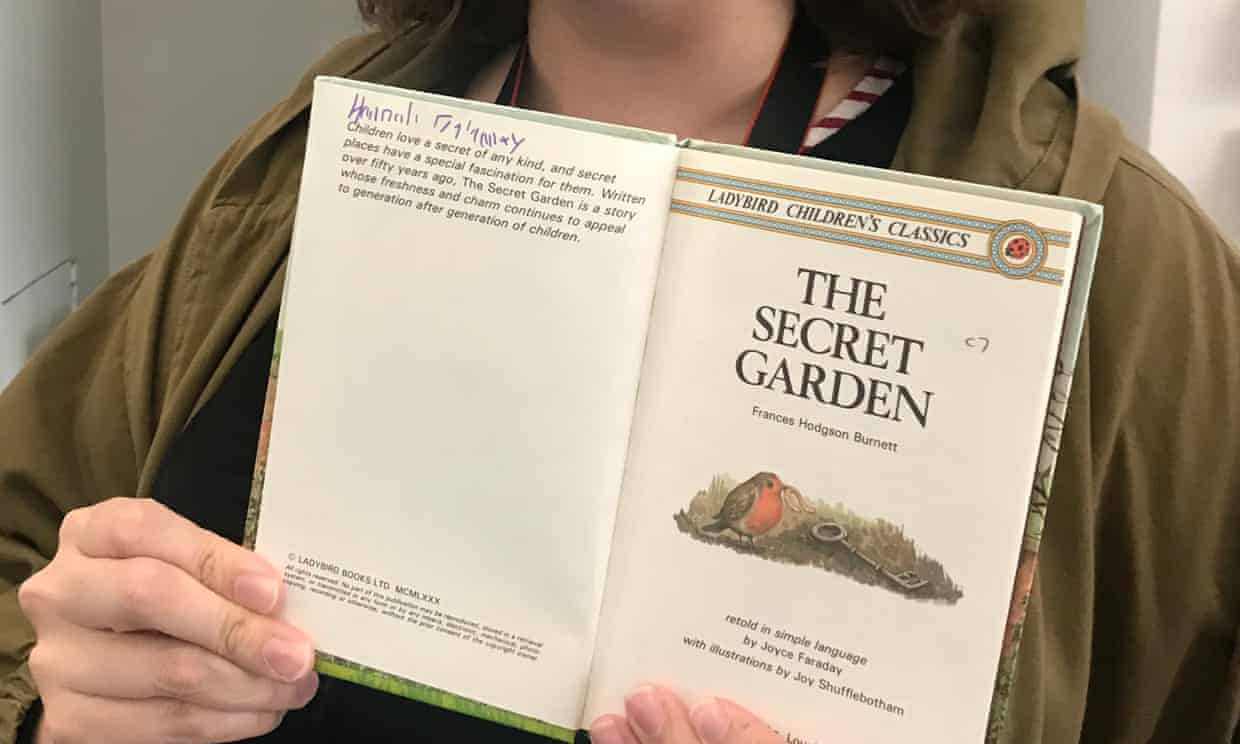
Imagine you’re browsing some used books for sale a museum dedicated to rural country life, which you are attending because, perhaps, you’re the sort of person who grew up in such a setting and are feeling nostalgic, when suddenly you stumble across your own childhood copy of a book. It’s the circle of life, Simba.

Andrews “couldn’t believe it when I found this book … Had to repurchase it. What are the chances?!” She couldn’t remember any details about the secret language her and her sister had written on the book. “I had a grid on a sheet of paper with a ‘key’ as to what symbols meant what. This is going back many years, probably 1993/94.”

Aw, 93/94? ANCIENT HISTORY. She is SO OLD. (By then, I’d already dropped out of university and was just returning to it after living like a bum on a highway somewhere in America, thinking, Maybe tomorrow, I’ll want to settle down, but until tomorrow, I’ll just keep moving on… Then it became tomorrow. And now here I am.)

Young’uns doing it for themselves

Ever wonder what the young people are reading? Not, not the Millennials, they’re not even proper young anymore. Yes, that’s how old you are. When you think of “young people” you are thinking of folks in their 30s. It’s like when someone asks you what year it was 20 years ago and you think, 1990. What generation are these highschoolers? Gen Y? Z? Is there a letter? Is it like Gen#? Or Gen Omega? Would fit with their chances of surviving the climate change. Whatever it is, they make me nervous in numbers. But exhilarated as well.

CBC Radio’s All in a Day invited Ottawa-area high school students to come on the show and make a case for the book they think their entire generation should read. The competition was moderated by All in a Day host Alan Neal and judged by teen book panellists Isabelle Walma and Ahmad Alkfri. They voted on who presented the most compelling arguments for their respective book.

Knausgaard 2114

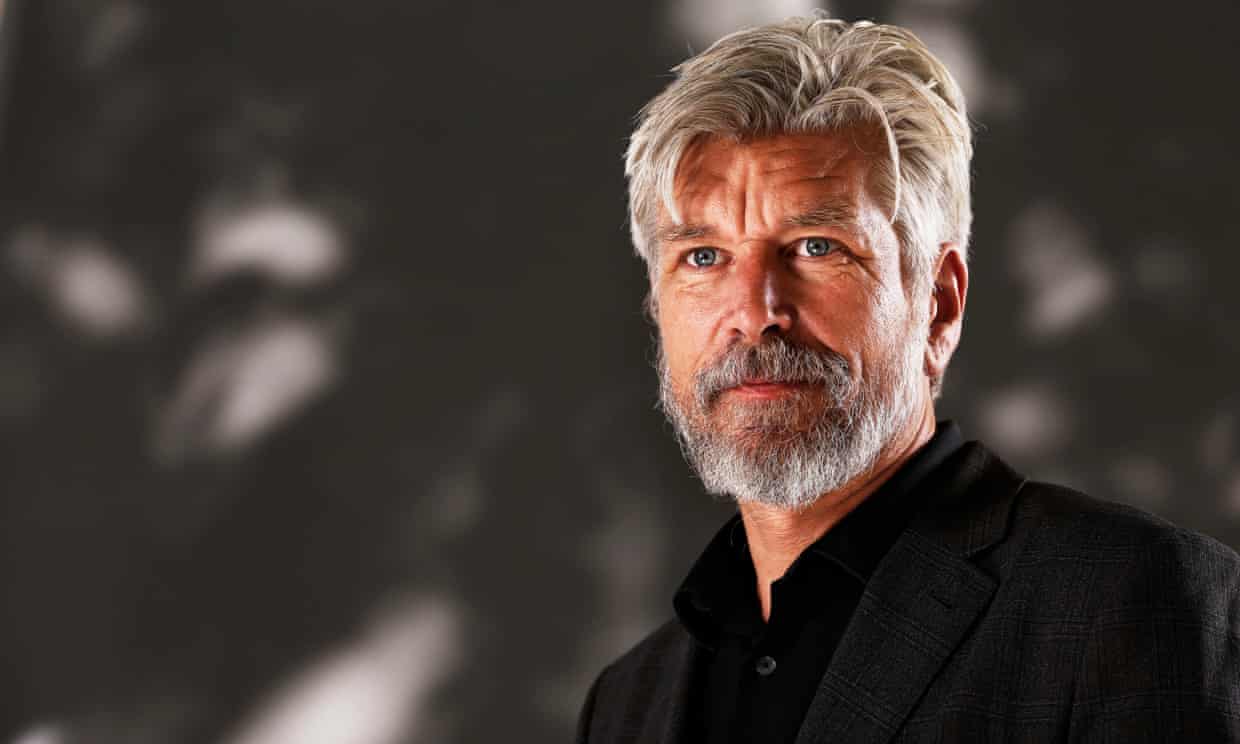
Karl Ove Knausgaard, pictured here in Jamie Lannister cosplay, has joined The Future Library. (I really have to turn Bookninja into a podcast so I could put some reverb and echo on “The Future Library”, and then play some pling-plonk beep-boop sounds like a CBC documentary from 1982.)

Karl Ove Knausgaard, who detailed the minutiae of his own life in the six-volume autobiographical novel My Struggle, has taken on a new challenge: the Norwegian writer is to become the sixth contributor to the Future Library, which collects works by contemporary authors that will remain unread until 2114.

The Future Library is described as a “living, breathing, organic artwork, unfolding over 100 years” by its creator, the Scottish artist Katie Paterson. It currently consists of 1,000 spruce trees that were planted in Oslo’s Nordmarka forest in 2014. After a century, they will be cut down and turned into paper. On this, the manuscripts by participating authors including Margaret Atwood, David Mitchell and Elif Shafak, will finally be printed.