On how fairy tales prop up the colonialist patriarchy

Why do we tell the same handful of fairy tales over and over? Because the system is predicated on teaching kids to be racist and support the patriarchy. Interesting leaping-off point for a few new stories I didn’t know.
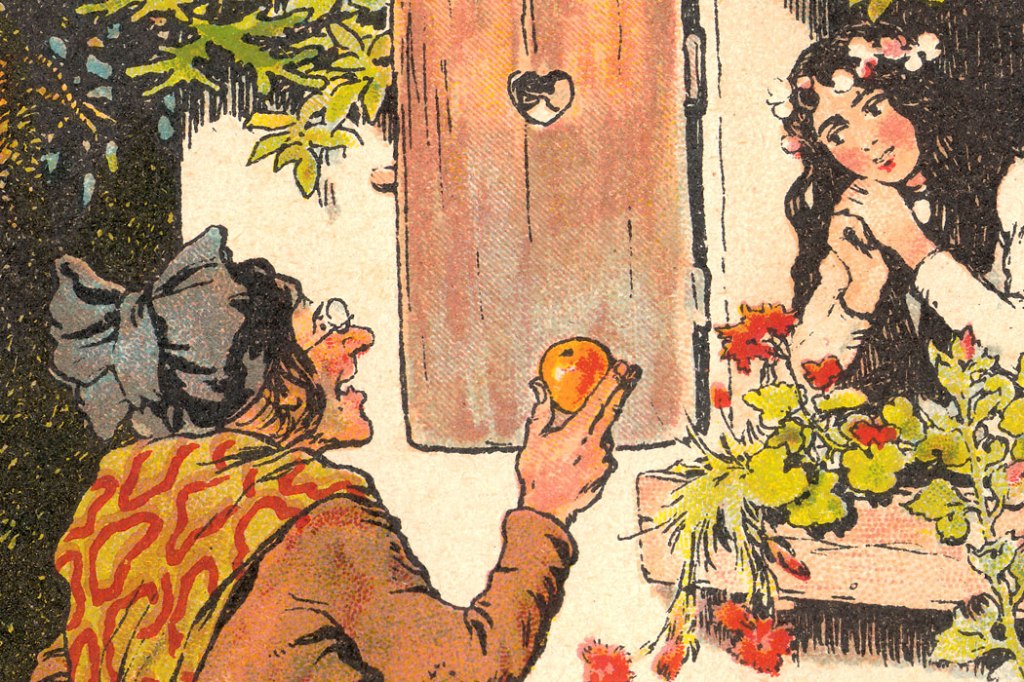
Patriarchal white colonialism has narrowed the field of popular fairytales to those from a few classic fairytale authors—Charles Perrault, Wilhelm and Jacob Grimm, and Hans Christian Andersen. And then Western white media winnowed the selection down even further by selecting tales from each of these authors that represented their values (especially Walt Disney). As author Kat Cho argues, “I do think that western fairytales are more widely disseminated because western culture is dominant in media and entertainment…I wish more folktales from non-western countries were more popular.” Kat Cho’s debut novel Wicked Fox uses the gumiho (nine-tailed fox) from Korean folklore as its premise.

The very familiarity of fairytales that makes them so magical is also problematic in that it stems partly from a racist, patriarchal media. And even within the most popular ten fairytales, white versions are usually the ones that are retold.

“For example, did you know one of the oldest versions of “Cinderella” we know of actually comes from China?” Shveta Thakrar, the author of the upcoming Star Daughter, asked. She’s referring to the fairytale “Yeh-hsien” (or “Ye Xian”) which was first published in 850 CE, and most likely dates back even further.  But the version most commonly recognized comes from Charles Perrault (Disney based his film Cinderella on Perrault’s version) or from the Grimm Brothers (like from Stephen Sondheim’s Into the Woods). This isn’t to say that authors who retell these popular fairytales are racist, not at all. Many authors retell these stories in subversive, feminist, anti-racist ways. But the popularity of this handful of fairytales all from white Western cultures serves to gate-keep writers of color from retelling the stories from their own cultures.
How are books changing to match the current world?

Luckily I am writing a fantasy novel and don’t have to consider any of this (though, coincidentally, there is a plague in my book), but authors are taking things into their own hands when it comes to adapting to things like post-Covid-19 life and racial inequality and under-representation.

Ng’s donation is part of a growing trend in publishing: authors of color are using their means to push for systemic changes to address publishing’s much-documented diversity problem. “I’m troubled by how undiverse the publishing industry is—extremely white, extremely straight, extremely abled, among other things—and have wanted to do something about it for the long time,” Ng tweeted when announcing the grants. “A job in publishing often requires experience like an internship—often unpaid or low-paid—before you can get hired. This shuts out many people who can’t afford that. But their voices are exactly what we need to acquire, publish, and champion stories that often go overlooked. The goal of these grants is to make internships (and hopefully careers) in publishing more accessible, so we can increase diversity in publishing from the ground up.”

The idea, Ng said in another tweet, was inspired by author and Ringer staff writer Shea Serrano. “Back in november i read an article at Publishers Weekly that included a stat that i thought was very sucky: hispanics barely make up 3 percent the racial makeup of publishing,” Serrano tweeted in December 2019, referring to the 2019 PW Salary Survey. “That chart really stuck with me in one of those bad kind of ways—i spent a lot thinking about how i didn’t even know writing for a living was a thing that was available because that’s not the kind of work they tell you about when you live on the south side of san antonio.” So he and his wife, Larami Serrano, donated $20,000 to the San Antonio Association of Hispanic Journalists to found a four-year, $5,000 scholarship in his name, given to students interested in becoming either a journalist or a published author.

Bookstore roundup

Strange times for the book industry, but people are adapting. Here’s hoping the social wildfires engulfing the USA right now will help encourage a new forest where a racist bog once stood. And if a few bookstores have to get burned down in the process, so be it. The history of systemic violence against Black people and their lives that are taken daily needs addressing more urgently than whether your favourite browsing spot or coffee shop is open or even a charred ash heap on Main Street.

On the power of Queer storytelling

Pride season is upon us and the lit media eye, when not focused on Covid or the the horrific/noble/painful/uplifting shitshow that is America right now, is turning to Queer publishing and awards. This author interview is a good read and outlines how Queer storytelling is keeping the world from sweeping the AIDS crisis under history’s rug.

I started the novel in 2013, during the Obama years—a different time, a different world. I finished the novel long before the outbreak of COVID-19, and it’s been very strange and surreal to experience my novel coming out during this global emergency and chaos. I don’t want to draw any quick or simple parallels between this and the AIDS crisis—40,000 people died of AIDS and six years passed before Reagan even mentioned AIDS in a speech. Still, I think we very much should look back at that time—to learn from the queer community and AIDS activists, how to survive a cruel, and in this case, highly incompetent, administration. I’m wary of messages in books—but maybe aspects of the novel will resonate differently now: how will we support each other, how do we build community and embrace compassion and kindness, what kind of society do we want to be?

Monday news

Well, it’s June. Where I live, we try to not speak of this month-long slog of chilly moistness, and fog. Or if we do, we refer to it as “The Dampening”. But it’s undoubtedly better where you are. Enjoy.

Bookstores surviving

In New York City rents are killing bookstores, but in Minneapolis, where racist cops have recently murdered yet another black man, and where riots are (rightfully) claiming the streets, bookstores are pulling through by being bookstores. One put up a sign of support that included the phrase “abolish the police” and was spared as protestors smashed everything around it (link from Ninja tipster Bianca). Listen closely, because this is really showing the true face of America: a group of marginalized, targeted, oppressed people are saying, “STOP KILLING US” and those doing the marginalizing, targeting, and oppressing are saying, “Wellllll…..” It’s fucking simple, America: stop killing black people. Stop hiring racists as cops. Stop selling guns to the populace. History is going to look back on the start of America as a dark age. Hopefully this presidency will be noted as the start of the end of it. The graph spike before the sharp valley. But we’ve been saying that for years, haven’t we. I wish these fuckers would just hurry up and end that Civil War that never ended.

Moon Palace Books in south Minneapolis was one of few businesses spared Wednesday night as some protesting over George Floyd’s death turned into rioting.

The bookstore, at 3032 Minnehaha Ave., is locally owned and has been selling books since 2012, according to its website. In a tweet Thursday, Moon Palace Books said, “We’re ok. Heartbroken for our neighbors and our community. Abolish the police.”

People on Twitter noted the independent bookstore was among the few businesses in the area of the Minneapolis Pollice Department’s 3rd Precinct that were left untouched Wednesday night.

Novel parenting?

Which novels would best prepare someone for parenting? HAHAHAHAHAH. But seriously, there’s no preparing. There’s just doing. If I have one word of advice about books for prospective parents it’s this: just pick one and stick to that. Don’t read widely. If you do, you’ll go crazy. This books says do X, that book says never do X, do Y instead, and the next one says, Alphabet? No, it’s about numbers, man. It’s all a racket. Your job is to keep the kid alive until adulthood, show it love and support, and try to instill some values that will help them think the world needs to be made into a better version of itself. EoS. On the other hand, everyone should read Anne Enright because, well, it’s Anne Enright.

First of all, congratulations – I so clearly remember the urge to understand the lay of that strange new territory ahead, longing for books that might offer a way in, if only for a moment. Making Babies by Anne Enright is a wonderful place to begin, because it is funny and poignant and vivid and written by a woman who is happy in her maternity, clear-eyed, but not frightening.

Friday!

You did it! And it’s nice out. And if you don’t look at anything except the page in front of you, the world isn’t so bad! Welcome to Friday. It’s one of the five days of spring in NL when we get weather above 20 degrees, so I am going to be sitting on the deck in five minute intervals (ginger), sipping a radler and pretending June isn’t about to happen. Go ahead, look up June weather in NL. It’ll make you feel better about where ever it is you live. At least I don’t have it as bad as George. If you’re allowed out of the house where you live, get out. Do some thinking about how we will solve the next big crisis facing Western Culture… TRTL: The ‘Rona Tan-Line (wherein the lower half of your face becomes a few shades lighter than the top half from mask-wearing). Enjoy!

What makes a person good vs. what makes a character good

More on the idea of autofiction. Stop imposing real world morals on us writers. I am struggling with this in my own writing. How do you make a hero likable and still flawed? What is a believable level of flaw? I’ve quit reading books because I was so surprised by a character’s bizarre choices that I said, I’M OUT! How do we negotiate that line? As a fledgling novelist, it’s a question I dwell on.

WHAT MAKES A PERSON GOOD? We can create a profile using social media and essays published in popular magazines. First and foremost, a good person possesses a deep understanding of power structures and her relative place in them. She has a sense of humor that never “punches down.” She doesn’t subtweet, buy stuff on Amazon, or fly on too many planes. She has children in order to fend off narcissism—a bad quality—and develop a stake in the future of planet Earth, but she would never presume to judge another woman’s choice. And though she occasionally makes mistakes—cheats on her boyfriend, offends her friends after drinking too much, doesn’t call her mom very often—she admits them. A good person is not perfect (she has read enough not to fall for that trap), but she is self-aware. If she ever has to ask, as the title of the popular subreddit goes, “Am I the Asshole?” and she receives an answer in the affirmative, she accepts it willingly and humbly, employing a template response, provided by her therapist, to convey how she’ll do better next time. Though she could rest on her morals, a good person is always trying to do better—not in a capitalist, life-hacking way, but in terms of acknowledging and improving the lives of others. She makes sure to let others know they should do the same.

I’m skeptical of the idea of good people, but I would be. Writers are notoriously bad people, a truism pronounced most often by people who go out with writers and second most often by writers themselves. Points added for self-awareness are deducted elsewhere. “All writers are vain, selfish, and lazy, and at the very bottom of their motives there lies a mystery,” George Orwell says in “Why I Write.”

These kids today

Apparently the new subject for fiction is… me. Everyone wants to protect and preserve their super boring internal monologues. I call it “Gaarding the Knauses.” Pro-tip: most Knauses aren’t worth gaarding.

Novels, the argument goes, used to be about power, about settled communities and the forces that drove them, about “society” and its transformations, and explaining, or perhaps only hinting, how the world worked. But you can’t write a novel like Middlemarch in 2020. The information isn’t there any more. Or rather there is so much information, so many accretions of tantalising and contradictory data, that no novelist could possibly make sense of it.

Hence the retreat into self-absorption. No one, the argument continues to run, can write a novel about Trump or Brexit or any of the other calamities that afflict us in these uncertain times head-on. Much better to stick to your honeymoon and the delectable Italian cuisine and let the really serious stuff filter in every so often over the web.